

Policyholders are understandably upset when an insurance company denies their claim for coverage. This can lead to litigation, typically for breach of contract. But what about other equitable legal remedies? For instance, can you sue an insurer in Florida for unfair trade practices or “unjust enrichment”?
Federal Court Rejects Lawsuit Over Travel Insurance Policy for Canceled Flight
This issue came up in a recent decision from the U.S. 11th Circuit Court of Appeals, Arencibia v. AGA Service Company, which was asked to apply Florida law to a dispute arising from a travel insurance policy. The plaintiff in this case purchased a plane ticket from Miami to Bogota, Colombia. At the time he booked his ticket, he was offered optional travel insurance, which was issued by the defendant. The plaintiff elected to purchase the insurance.
The plaintiff later canceled his plane trip because a work commitment overlapped with his planned Colombia trip. The plaintiff believed his insurance was a “no fault” policy, so he could cancel his trip for any reason and still receive coverage. But the defendant later informed the plaintiff that the policy he purchased was “a named perils travel insurance program, which means it covers only the specific situations, events and losses included in” the policy. As the plaintiff’s reason for canceling his ticket–being required to work–was not covered, he was not entitled to coverage.
Dissatisfied with this response, the plaintiff filed a lawsuit in Miami federal court, alleging the defendant violated the Florida Deceptive and Unfair Trade Practices Act and the federal RICO statute. A judge ended up dismissing all of these claims. On appeal, the 11th Circuit upheld that dismissal.
The plaintiff’s state law claims focused on what he viewed as the “unjust enrichment” of the defendant. As the 11th Circuit explained, unjust enrichment requires proof that the plaintiff conferred a “benefit” on the defendant, and the defendant’s acceptance and retention of said benefit “would make it inequitable for him to retain it without paying the value thereof.” In other words, unjust enrichment is a claim based in equity.
The problem here was that Florida law does not allow for equitable remedies when “an express contract exists.” And an insurance policy is an “express contract.” The plaintiff did not dispute this, although he insisted the insurance policy was “void and unenforceable” because the defendant somehow misrepresented its travel insurance as “no fault.” The 11th Circuit rejected that, however, noting the policy itself clearly stated, “Not every loss is covered, even if it is due to something sudden, unexpected, or out of your control.”
Speak with a Florida Insurance Litigation Attorney Today
If an insurance company has denied your claim and you wish to take further action, your first step should be to seek out qualified legal advice. A Tampa insurance litigation lawyer can review your case and advise you of your options. Contact HD Law Partners today to schedule a free consultation.
Is A Florida Timeshare Subject To Foreclosure?
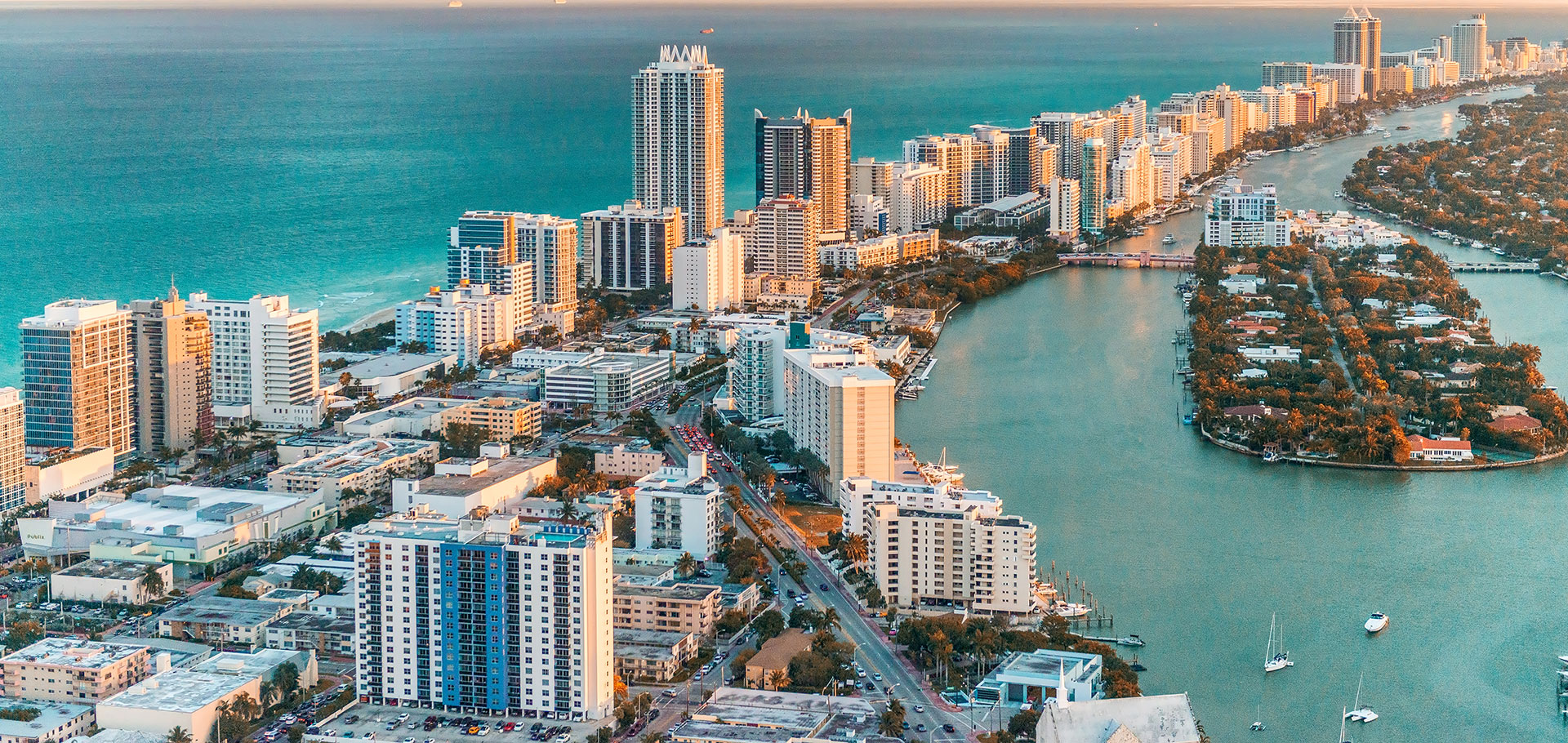
When you purchase a deeded timeshare, you are actually buying an interest in real property. As with any real estate purchase, many buyers finance their timeshares by taking out a mortgage loan. Additionally, many timeshare contracts require residents to pay certain maintenance fees and assessments, just as you would with any homeowners’ association.
So if you fail to pay your mortgage or maintenance fees on time, can your timeshare interest actually be subject to foreclosure? The short answer is “yes.” And under Florida law, timeshare holders may be subject to a quicker legal process than a normal residential foreclosure.
Judicial vs. Non-Judicial Foreclosure
When it comes to residential homeowners, Florida law requires a judicial foreclosure process. This means that the mortgage lender or homeowners’ association (HOA) must go to court and file a lawsuit against the homeowner. The homeowner has the right to contest the action in a formal court hearing. But if the homeowner does not contest the proceeding, or the judge decides the lender or HOA’s case has merit, the court can order the property sold at a foreclosure auction.
In the case of timeshares, Florida also permits non-judicial foreclosures. What this means is that instead of going to court and filing a lawsuit, the mortgage lender or HOA simply appoints a trustee to oversee the foreclosure process. The trustee will then send a letter to the timeshare holder warning them to “cure the deficiency”–i.e., get current on mortgage payments or maintenance fees–or face foreclosure.
If you as the timeshare holder do not take action within a specified time period, the trustee can then proceed to complete the foreclosure and auction off your interest in the timeshare, without the need for a court order.
Could You Still Be on the Hook After the Foreclosure?
What are your options in the event of a non-judicial foreclosure of your deeded timeshare interest? Obviously, you can simply pay the money that you owe to cure the defect. But if that is not an option, you can also attempt to negotiate a repayment plan with the lender or HOA. You may also wish to simply sell your timeshare interest.
A common question we get with respect to the latter option is, “What if the money I get from the sale is not enough to pay back my mortgage loan? Can the lender sue me for the rest?” Under Florida law, if a timeshare owner does not contest a non-judicial foreclosure, then the lender is barred from seeking a deficiency judgment–i.e., collecting the difference between what the property sells for and what is owed on the original mortgage.
Of course, before you take any action, it is in your best interest to first speak with a qualified Tampa timeshare attorney who can review your case and advise you of your options. Contact HD Law Partners today to schedule a free consultation with a member of our team.

Last year, the Florida legislature adopted significant changes to the state’s property insurance laws. Among these amendments are a new requirement that commercial or residential policyholders file a notice with the state before suing an insurance company over its denial of a claim. This pre-suit notice must be given “at least 10 business days” before filing a lawsuit, but not before the expiration of a 90-day period during which the insurer has the right to review and either pay or deny the claim.
The purpose of the new pre-suit notice is to give the insurer additional time to investigate and review the claim and decide whether to either accept coverage, continue to deny coverage, or reinspect the property. Only if the insurer continues to deny the claim can the policyholder then file a lawsuit. If the insurer failed to file the pre-suit notice beforehand, however, the court is required to dismiss the lawsuit with prejudice.
Federal Judge Applied 2010 Florida Supreme Court Decision to Interpreting 2021 Statute
One question that is likely to arise in the Florida courts is whether this new pre-suit notice requirement is retroactive, that is whether it applies to insurance policies issued before the law took effect on July 1, 2021. At least one federal judge has already considered this question and ruled the law should not be applied retroactively.
The case in question, Dozois v. Hartford Insurance Company of the Midwest, involves a couple whose Florida home sustained wind damage. They filed a claim with their insurance carrier. The policy in question took effect on January 31, 2021, six five months before the new Florida pre-suit notice law took effect.
The plaintiffs filed their lawsuit in August 2021 alleging the insurance company failed to fully indemnify them for the wind damage to their property. In response, the insurer argued the lawsuit should be dismissed as the plaintiffs never filed a pre-suit notice. The insurer said that since the lawsuit was filed after the new law took effect, it should be applied retroactively to this case.
The judge disagreed. The court pointed to a 2010 decision from the Florida Supreme Court, Menendez v. Progressive Express Insurance Co., which involved a similar Florida law requiring pre-suit notice before suing under the state’s no-fault law governing auto accident benefits. The Menendez court held that statutes that included provisions “that impose additional penalties for noncompliance … do not apply retroactively.” The judge here said the same principle should apply. Since there was now a penalty for failure to comply with the pre-suit notice requirement–dismissal of the plaintiff’s case–the 2021 law could not be applied retroactively.
Speak with an HD Law Partners Attorney Today
The 2021 legislation represented a substantial change to the state’s insurance laws. As courts continue to sort out the implications of these new rules, it is even more critical that you work with an experienced Tampa insurance litigation attorney if you are involved in a coverage dispute. Contact HD Law Partners today to schedule a consultation with a member of our staff.
Source:
scholar.google.com/scholar_case?case=1233780609830323576

Each year, thousands of people set sail on cruise ships out of Florida. Most of these cruisers enjoy a wonderful vacation. Unfortunately, some people sustain serious injuries on their trip, often due to the negligence of the cruise line.
Now, you can file a personal injury lawsuit against a cruise ship operator just as you would any other negligent property owner. But such cases are often handicapped by the terms of the ticket that was issued before the cruise even began. If you have ever taken a cruise, you know what we are talking about. Most cruise tickets include, or refer to, a lengthy “ticket contract” that you must agree to beforehand, similar to a terms of service on a commercial website. These contracts often contain language that can restrict or even prevent you from bringing a personal injury claim should the need arise.
Florida Judge Dismisses Slip and Fall Case Due to One-Year Limitations Period in Contract
A recent decision from a federal judge in Miami provides a case in point. In Roberts v. Carnival Corporation, the plaintiff was a passenger on the defendant’s cruise ship. During the cruise, the plaintiff slipped and fell on the ship’s pool deck. She called the ship’s infirmary and was told someone would come attend to her at the pool. But nobody ever came, the plaintiff said, and she then had to walk to the infirmary herself, only further aggravating her injuries.
The plaintiff sued the defendant for negligence about two years after the accident. The defense moved for summary judgment based on the terms of the plaintiff’s ticket contract, which reduced the applicable statute of limitations to just one year. (For point of reference, Florida’s statute of limitations for personal injury cases is normally four years.)
The plaintiff replied that she never personally accepted the ticket contract or the one-year limitations period. She said that she did not “personally book the cruise.” The plaintiff’s sister had booked the cruise and simply given the plaintiff her boarding pass just before the trip began. As such, the plaintiff said she never had a meaningful opportunity to review, much less agree to, the contract.
The judge said none of that mattered. The court noted that the defendant was only required to give the plaintiff a “reasonable opportunity to become meaningfully informed of the contract term.” This can be accomplished by giving notice to the person “who books travel arrangements on the passenger’s behalf.” And even if the plaintiff did not have a chance to review the terms of the contract before the cruise, she certainly did in the year following the cruise, and thus could have complied with the one-year limitations period. For that reason, the judge granted summary judgment to the defense and dismissed the case.
Speak with an HD Law Partners Attorney Today
Anytime that you sustain an injury on someone else’s property, it is a good idea to seek out legal advice as soon as possible in order to preserve all of your potential options for seeking compensation. If you need to consult with a qualified Tampa slip and fall attorney, contact HD Law Partners today.
Source:
https://scholar.google.com/scholar_case?case=15815546255282337305
As another hurricane season approaches here in Florida, it is a good idea for all homeowners to review their insurance coverage and understand what damages may–or may not be–covered by a storm. All insurance policies contain some form of deductible. But many policies that cover windstorm damage will also include a separate “hurricane deductible.”
What Is a “Hurricane” for Insurance Purposes?
Typically, a hurricane deductible applies separately from other deductibles applied to coverage for wind damage. A “hurricane” in this context means a storm system that has been declared as such by the National Weather Service. Typically, if the storm is named–e.g., Hurricane Irma–it will likely meet the legal definition of “hurricane” for insurance purposes.
Under Florida law, an insurance company can only enforce a hurricane deductible for such named storms. Specifically, the hurricane deductible may only be applied during a period beginning when the National Weather Service issues a “hurricane watch” or “hurricane warning” for the affected area, and ending 72 hours after the final warning or watch for any part of Florida terminates.
The amount of the hurricane deductible itself is also governed by state law. The general rule is that the insurer must offer hurricane deductible options of:
- $500;
- 2 percent of the policy dwelling or structure limits;
- 5 percent of the limits; or
- 10 percent of the limits.
The percentage limits must still be expressed in dollar terms for the policyholder. There are also some exceptions. For example, if a house is insured for $250,000 or more, the insurer is not required to offer a $500 deductible option.
What If There Are Multiple Hurricanes in a Season?
Most Florida residential insurance policies include “single season” hurricane deductibles. This essentially means that the hurricane deductible is only applied to wind damage from the first named store during a given calendar year. If there is a second storm, the insurer may apply only the remainder of the hurricane deductible leftover from the first storm or the “all peril” deductible in the policy.
Note that the single-season rule applies to the calendar year itself, not the period of a given policy. For example, let’s say a given homeowner typically renews their policy every 12 months in August. Their home was damaged by two hurricanes, the first in July and the second in September. The single-season hurricane deductible applied to wind damage from the July storm. If any of the deductible went unused, it would then be applied to wind damage from the September storm. But the hurricane deductible did not “reset” in August.
Speak with an HD Law Partners Attorney Today
It is also important to note that hurricane coverage and hurricane deductibles only apply to windstorm damage to a property. These rules do not apply to any flood damage that may arise from a hurricane. The homeowner must purchase separate flood insurance to cover such contingencies.
If you are involved in a dispute over coverage obligations arising under a homeowner’s policy and need legal advice from a qualified Tampa insurance attorney, contact HD Law Partners today to schedule a consultation.
Source: https://myfloridacfo.com/Division/Consumers/FloridasHurricaneDeductible.htm
Can A Florida Limited Liability Company Be Held Responsible For The Personal Debts Of Its Members?

The most common reason for a person or group of persons to form a limited liability company (LLC) or corporation is to protect their personal assets from business creditors. In other words, if the business is sued, any judgment can only be collected against the assets owned by the business entity itself and not the individual owners.
But what about the reverse? If a member of an LLC has personal debts, can that creditor go after the business? The answer to these questions largely depend on the type of LLC we are talking about. Historically, you needed at least two “members” to form an LLC. But in recent years every state, including Florida, has amended their laws to permit the formation of LLCs with a single member. This allows many self-employed people to form a separate legal entity for their work.
Florida Has Special Rules for Single-Member LLCs
With a multi-member LLC, Florida law limits a creditor’s options for collecting an unpaid personal debt to seeking what is known as a “charging order.” This is basically a lien against the debtor member’s interest in distributions from the LLC. In multi-member LLCs it is common for the company to make periodic distributions of profits to members. With a charging order, a personal creditor can basically claim that money to satisfy the member’s debt.
A charging order does not allow a personal creditor to actually foreclose on the member’s interest or attempt to take a direct role in the LLC’s operations. The reason for this is simple. When an LLC has more than one member, it would be unfair to allow one member’s personal debts to affect the rights and interests of the other members.
But when we are dealing with a single-member LLC, there are no other members to consider. For that reason, Florida law expressly provides creditors with an additional option when collecting a personal debt owed by the sole member of a LLC. If a charging order is insufficient to pay back the debt, the creditor can seek to foreclose on the debtor’s interest in the LLC itself.
In practical terms, this means that the creditor can force a judicial sale of the LLC. If the creditor purchases the LLC at sale, it acquires all of its assets. If someone else purchases the member’s interest, that money must also be used to pay back the creditor. Either way, a foreclosure sale will likely result in the dissolution of the LLC and an end to its business.
Keep in mind, Florida is one of the few states that permit this type of foreclosure sale. If the LLC is legally organized in another state this may not be an option, even if the single-member LLC conducts business in Florida. And again, this option is not available when the LLC has at least two members.
Speak with an HD Law Partners Attorney Today
If you have questions about the best way to protect your business from potential legal liability, or you are involved in a dispute and need representation, the experienced Tampa corporate attorneys at HD Law Partners are here to help. Contact us today to schedule a free initial consultation.
As a general legal principle, if somebody files a lawsuit against you, and you fail to respond in any way, the trial court has the authority to enter a default judgment for the plaintiff. But even after a default judgment is entered, the defendant can still ask to set it aside based on grounds of “excusable neglect” under Florida law. The defendant must also show they have a “meritorious defense” to the underlying lawsuit and acted with “due diligence” to set aside the default.
Clerical Error Leads to Insurance Company Missing Judge’s Deadline
A recent decision from the Florida Third District Court of Appeal, Universal Property & Casualty Insurance Company v. Dimanche, illustrates how these rules work in practice. This is an ongoing lawsuit over insurance coverage. The defendant issued a homeowners’ policy to the plaintiffs.
The plaintiffs filed a claim for damage to their property. The defendant did not pay. The plaintiffs subsequently filed a lawsuit, seeking approximately $65,000 in damages to repair their home.
After filing the initial complaint, however, neither party took any action to move the lawsuit along. The trial court, on its own initiative, directed the plaintiffs to file a motion for entry of a default within 10 days. They failed to do so.
The same day the judge issued his order to the plaintiffs, the defendants appeared and filed a motion to dismiss. The judge denied this motion and ordered the defendant to file an answer to the lawsuit within 7 days or face default. Unfortunately, a legal assistant in the defendant’s office failed to put the deadline on their calendar, and so it passed without an answer. The judge then entered a default against the defendant.
The Third District held that default was not appropriate in this situation. The assistant’s calendaring error was a case of “excusable neglect.” The defendant also had a “meritorious defense” to the plaintiffs’ lawsuit. Specifically, the defendant said the damage claimed by the plaintiffs was not a “covered peril” under their homeowner’s policy. Finally, the defendant acted with due diligence to set aside the default. The Third District therefore returned the case to the trial court for further proceedings on the merits of the lawsuit.
Speak with an HD Law Partners Attorney Today
In any legal proceeding–whether you are the plaintiff or the defendant–it is critical that you follow all court deadlines and assert your rights in a timely manner. Litigation is never something to treat casually or lightly.
In particular, insurance disputes are governed by a complex array of rules and procedures. Even the most experienced party may slip up, as the case above illustrates, which is why it is all the more essential to work with an experienced Tampa insurance attorney that specializes in this type of litigation.
HD Law Partners today if you want to work with attorneys’ who have over 40 years of combined experience assisting clients in insurance matters.
Source:
https://scholar.google.com/scholar_case?case=15472629029890634316

The federal nature of our legal system means there are situations where a federal law may override or “preempt” a state law. This can, in turn, significantly affect the rights of private parties to civil litigation whose disputes are covered by such laws. Indeed, the question of whether preemption applies can itself lead to litigation.
Airline Faces Customer Class Action Over “Exit Fees”
A recent decision from the U.S. 11th Circuit Court of Appeals, Cavalieri v. Avior Airlines CA, provides a case in point. This case arose from a dispute over an extra fee added to an airline ticket. The defendant airline argued that federal law preempted any state breach-of-contract claim arising from the sale of said tickets.
Here is some additional background. The defendant operated flights from Miami to Venezuela. The tickets sold for said flights are a legal type of contract known as a “contract of carriage.” Here, the plaintiffs said they purchased their tickets for a certain price, only to be later told they needed to pay an additional $80 “exit fee” before boarding their flights.
The plaintiffs alleged this exit fee was an “extra-contractual” charge and filed a class action against the defendant in Miami federal court. The lawsuit specifically alleged breach of contract by charging a fee that fell outside the price terms specified in the contract of carriage.
In response, the defendant moved to dismiss the lawsuit on a number of grounds. As relevant here, the defense asserted that the federal Airline Deregulation Act (ADA) preempted any breach-of-contract claims. The ADA is a 1978 law that eliminated government regulation of airline ticket prices. The ADA expressly preempted any state or local law “related to a price, route, or service of an air carrier.”
A federal district court agreed with the defense that this preemption rule barred the plaintiffs’ lawsuit. The 11th Circuit disagreed. While the alleged illegal fee was “related to” the price of an airline ticket, the ADA preemption did not apply here.
The reason, the 11th Circuit said, was that the lawsuit alleged that the defendant’s “own, self-imposed undertaking regarding the price charged for transport” breached the contract it entered into with the plaintiffs. The plaintiffs did not invoke any state law or regulation that would otherwise alter the terms of their contract of carriage, which would be preempted under the ADA. Instead, the plaintiffs merely seek to enforce their contractual rights.
More to the point, the 11th Circuit said the plaintiffs did allege a “plausible action for breach of contract.” Without deciding the issue on its merits, the Court observed that if the plaintiffs can prove the exit fee was not disclosed on their contract of carriage, a jury could find there was a breach of contract.
Speak with an HD Law Partners Attorney Today
Seemingly simple business disputes often do not have simple answers. That is why you should always work with a qualified Tampa business and corporate attorney when dealing with any type of contractual issue. Contact HD Law Partners today to schedule a consultation.
Source:
scholar.google.com/scholar_case?case=12404671831507050100
A limited liability company (LLC) provides a flexible mechanism for one or more people to form a business with protection from personal liability for business debts. Unlike a corporation, where shareholders often play no role in the day-to-day management of the business, an LLC may be structured so as to give the individual owners (known as “members”) direct control over management.
Of course, this can pose some challenges as well. For example, what if you have four members in an LLC and there is a 2-2 deadlock over an important business decision? Every LLC should have an operating agreement, which is a contract between the members, to detail how issues of governance should be handled. But even then, if the operating agreement requires a majority vote of the membership, what is the remedy for a deadlock?
Options for Resolving a Deadlock (Without Going to Court)
Again, a well-drafted operating agreement should anticipate and provide for such contingencies. Here are a few examples of mechanisms for breaking a deadlock between LLC members:
- Tie-breaking vote – Perhaps the most direct way of resolving a deadlock is to give one member a tie-breaking vote. This is often more complicated than it sounds, however, as that can create a great deal of friction among the members. It can also be difficult to determine when a deadlock is so entrenched as to justify using a tie-breaking vote.
- Third-party tie-breakers – Another approach is to designate some outside group or body to resolve a membership deadlock. For example, the LLC could agree to retain an outside professional adviser to act as a tie-breaker should the need arise. Or to go a more formal route, the operating agreement could require third-party mediation or arbitration in the event of a deadlock.
- Buy-sell provision – The operating agreement may also contain language permitting resolution of a deadlock by allowing one member (or perhaps a group of members) to offer to buy out the other side. The other party can then either sell their membership interest or purchase the offeror’s interest for the same terms. Alternatively, the agreement can require the parties to hire an outside appraiser to value the business as a first step towards a buyout.
What If Nothing Else Works?
If for whatever reason there is no practical way to resolve a membership deadlock, any of the members can file a lawsuit seeking a judicial dissolution of the LLC on the grounds that the members are deadlocked to the point where the business is suffering. The court can take a number of actions, including forcing the dissolution of the LLC, appointing a receiver for the business, or even forcing the expulsion of a member to break the deadlock.
If you are involved in such a situation and need legal advice from a qualified Tampa business disputes lawyer, contact HD Law Partners today to schedule a consultation with a member of our team. Call us at 813-964-7878 or visit us online at https://www.hdlawpartners.com/contact-us/
Source:
A Homeowners’ Policy Is Not Like Auto Insurance

If you own your own home and a car, you likely have insurance on both. There is a critical difference between the two types of insurance. Florida law requires drivers to carry a minimum amount of auto insurance known as personal injury protection (PIP) coverage. As far as your home goes, however, state law imposes no similar requirement. If you have a mortgage, the lender will usually require homeowners’ insurance to protect their interests. The State of Florida won’t punish the homeowner if the owner decides not to insure the house.
Contractor Battles Insurer Over Water Damage Repairs
Since homeowners’ insurance is not mandatory, it is purely a matter of contract between the policyholder and the insurer. As such, legal concepts that may apply to homeowners’ policies may not apply to auto insurance, and vice versa. This came up in a recent decision from the Florida Fourth District Court of Appeals, People’s Trust Insurance Company v. Restoration Genie Inc., which involved the interpretation of a homeowners’ policy.
This particular case involved a claim for water damage. The homeowner experienced a leak and sought coverage. The policy had what is known as a “preferred contractor” clause. Basically, the insurer gave the homeowner a $75 annual credit against his premiums, and in exchange he agreed that the insurer could use its own “rapid response team” (RRT) as its preferred contractor to make repairs.
In this case, however, the homeowner decided to use his own contractor to repair the water damage. Under the policy, if the homeowner failed to notify the insurer of a loss and let its RRT team perform the work, then the insurer’s coverage obligation was limited to either the “reasonable cost incurred for mitigation” or the amount the insurer would have paid the RRT to perform the emergency repairs, whichever was less.
The homeowner assigned his coverage rights to his contractor. The contractor, in turn, billed the insurer $5,327.10 for the repairs. The insurer said it would only pay $2,000, as it did not receive prior notice and that was the limit it would have paid its own RRT for the work. The contractor subsequently sued the insurer for the difference.
A Florida circuit court judge granted summary judgment to the contractor. But the Fourth District reversed, holding there were still disputed factual issues requiring trial. The appellate court specifically rejected the contractor’s argument that the insurance company’s service agreement with its RRT, which limited payments to $2,000 in these cases, effectively amended the homeowner’s insurance policy and created a new coverage limit. Under Florida law, insurers typically need to provide notice in cases involving auto insurance when attempting to limit reimbursements for covered expenses.
But as the Fourth District explained, this was not an auto insurance case. Homeowner’s coverage is not mandated by state law and, as such, is not subject to the same restrictions as PIP coverage. So the contractor in this case could not rely on case law related to auto coverage to prevail in its claim.
Speak with Our Team at HD Law Partners Today
Insurance companies often must litigate to enforce their clearly stated rights under a given policy. If you are involved in a disputed mold and water damage claim and need legal representation from a qualified Tampa insurance attorney, contact HD Law Partners today to schedule a consultation.
Source:
Connect with us


- February 2026
- January 2026
- December 2025
- November 2025
- October 2025
- September 2025
- July 2025
- June 2025
- January 2025
- January 2024
- December 2023
- November 2023
- October 2023
- September 2023
- August 2023
- July 2023
- June 2023
- May 2023
- April 2023
- March 2023
- February 2023
- January 2023
- December 2022
- November 2022
- October 2022
- September 2022
- August 2022
- July 2022
- May 2022
- April 2022
- March 2022
- November 2021
- October 2021
- September 2021
- August 2021
- July 2021
- May 2021
- April 2021
- March 2021
- February 2021
- January 2021
- December 2020
- November 2020
- October 2020
- August 2020
- July 2020
- June 2020
- May 2020
- April 2020
- March 2020
- February 2020
- January 2020
- December 2019
- November 2019
- October 2019
- September 2019
- August 2019
- July 2019
- June 2019
- May 2019
- April 2019
- March 2019
- February 2019
- January 2019
- December 2018
- November 2018
- October 2018
- September 2018
- August 2018
- July 2018
- June 2018
- May 2018
- April 2018
- March 2018
- February 2018
- January 2018
- December 2017
- November 2017
- October 2017
- September 2017
- August 2017
- July 2017
- June 2017
- May 2017
- April 2017
- March 2017
- February 2017
- January 2017
- December 2016
- November 2016
- October 2016
- November 13
Archives
- Alimony
- Appellate
- Arbitration
- Auto Accidents
- Auto Insurance
- Business Corporate
- Business Insurance Law
- Child Custody
- Child Support
- Criminal Law
- Divorce
- Family Law
- FEMA Insurance Payments
- Florida’s Mandatory 2‑Hour Legal Professionalism CLE:
- Foreclosure Defense
- Fort Myers Hurricane Insurance Attorney
- General
- Guardianship
- HD Law Partners Service
- HOA/Property Management
- Homeowners Association
- Homeowners Insurance
- Hurricane Claims
- Hurricane Insurance
- Insurance Bad Faith
- Insurance Claims
- Insurance Defense
- Insurance Litigation
- Landlord Tenant
- Law Enforcement Liability
- Loan Modifications
- Mold Water Damage
- Parental Rights
- Paternity
- Personal Injury
- Premises Liability Law
- Prenuptial Agreements
- Private Security
- Property Distribution
- Property Owner Law
- Sarasota Insurance Litigation Attorney
- Slip Fall
- Tampa Business and Corporate Attorneys
- tampa family attorney
- Tampa Insurance Attorneys
- Timeshare
- Timesharing
- Uncategorized
Categories

HD Law Partners is proud to be your trusted full-service law firm