When an insurance company denies a valid claim or handles it unfairly, legal action could be your best option. Hiring a Sarasota, FL insurance litigation attorney early will mean you fully understand your rights and the path forward.
A lawyer can help a lot, right from the beginning. Your lawyer will review your policy, the denial, and the evidence to assess if you have a strong case. They’ll explain all your legal options, handle all communications with the insurer, prevent you from saying or signing anything that harms your position, and help you decide if suing is worth the time and cost.
The process really begins when your lawyer sends a demand letter to the insurer outlining the facts, any policy violations, and what you’re requesting in compensation. This letter usually also includes calculations for damages. At that point, the insurer will usually respond with a counteroffer.
You may go into mediation at this point, and often this resolves things. If you can come to a settlement, you’ll save on court fees and have access to your payout more quickly. But even with a mediation, you’ll want the help of a lawyer. Your lawyer will protect you from signing any deals that aren’t in your best interests and will bring experience in negotiation to your side of the table.
When an unforeseen accident or incident occurs, it is common for people in Florida and throughout the country to rely on insurance policies for financial protection and support. While the process of monetary recovery is often smooth, there are some instances where an insurance company claims a policy wasn’t in effect at the time of the event, leaving the person in a vulnerable position.
Insurance negotiations can be nuanced, and it is important to remember that your insurance policy should provide you with the financial security you were led to expect when you bought the policy. You have the right to demand the coverage, even if you are in a troubling situation where your insurer asserts that your policy wasn’t active. Legal support is available, talk to a Tampa insurance attorney about your options.
A policy lapse could be the reason an insurance representative tells you do not have a valid claim. Lapses occur when a policyholder fails to pay their premium on time or meet other policy requirements. As a result, there could be a temporary or permanent termination of the coverage. Lapses can happen for various reasons, including financial difficulties, administrative errors, or simply overlooking payment deadlines.
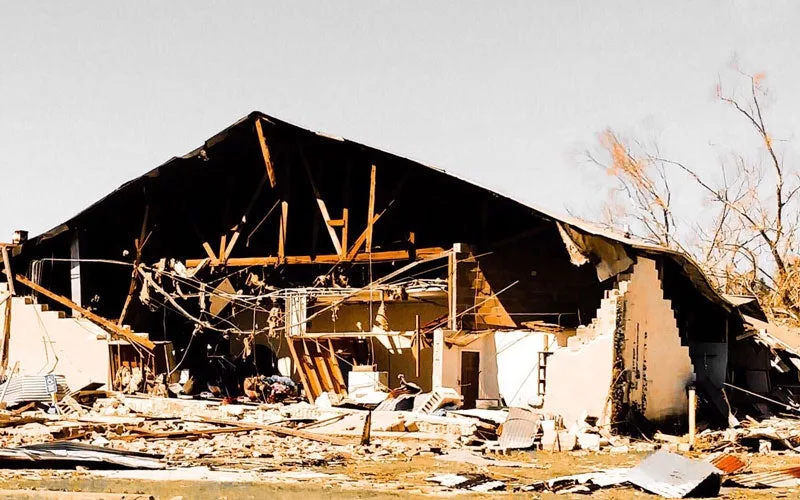
Living in Florida, everyone is familiar with the devastating impact hurricanes can have on properties. In the aftermath of a hurricane, filing an insurance claim is often the first step towards recovering the losses and rebuilding lives, but there are times when insurance companies deny hurricane claims, leaving policyholders frustrated and unsure of what to do next.
Talk to connect with a Tampa insurance attorney about next steps if you experienced a Florida hurricane claim denial. When you seek legal assistance and follow the right path, your chances of obtaining the compensation you deserve increases.
One of the first steps you should take if you are pursuing hurricane expense recovery is to carefully review your insurance policy, paying close attention to stated reasons why a claim could be denied. When you understand specific terms, coverage limits, and exclusions in your policy, it can be easier to determine whether the denial is justified or there are valid grounds for challenging a denial.
While Florida is known for its sunny, warm days and beautiful beaches, it is also no stranger to storms and floods. The risk of flooding is a regular concern for Tampa homeowners and businesses alike. This is because the Tampa area does not have a lot of topographical relief when heavy rains and tropical storms hit. As a result, water doesn’t drain quickly, and there are tidal floods to be aware of as well.
A seasoned Tampa insurance attorney can provide you with legal advice and guidance if you have questions about flood insurance coverage and claims. And if you have already experienced flooding, a lawyer will help you file a claim, negotiate with your insurance company or other parties, and represent you in court if necessary.
There are legal professionals available to help you secure the recovery you need due to flood damage. Some situations when a flood attorney can help:
There are often many steps to strengthening a claim, such as an evaluation process, connecting with documentation, filing paperwork, and negotiating with others involved in the case. And there are additional considerations if a dispute goes to court.
Sinkhole damage can be extremely expensive, and because of Florida’s unique geology, compared to other US states, sinkholes happen more often than they do in other areas of the country. Because of this, there are specific regulations and laws when it comes to assessing sinkhole damage and obtaining compensation through insurance claims.
Insurance companies have a responsibility to follow through on the promises made in policies purchased by members of the public. That said, there are many examples of insurance companies trying to underpay on sinkhole damage claims. After all, insurance companies are like other businesses, they want to turn a profit. Legal teams work within insurance companies to protect their organization and their assets, you need a Tampa insurance attorney to protect your interests. A skilled lawyer will work to ensure you receive the settlement you need.
Florida law makes it a requirement for state insurance companies to offer their policyholders coverage for sinkhole activity. But even if you do opt for sinkhole coverage, it is possible your path to compensation could be complicated. This is because there is a lot of documentation needed to prove you are eligible for recovery.
If you are wondering about what the responsibilities are for Florida insurance companies, know that there is an area of law specifically designed for these determinations. Property and casualty law in Florida refers to the legal principles and regulations that govern the insurance industry in the state. Property and casualty insurance covers a wide range of risks, including damage to property (such as homes and buildings) and liability for injuries or damages caused by an individual or a business.
When questions about property and casualty laws arise, connect with a Tampa insurance attorney. Skilled lawyers with a background in this area of law will know about all of the details that could apply to your situation, such as the time limit for policyholders to file a claim and how long an insurance company has to respond to that filing. Additionally, there are rules about how disputes should be resolved, should they arise.
As an insurance policyholder, there may come a time when you file a property and casualty claim. Essentially, property and casualty law in Florida is the body of law that governs the legal rights and responsibilities of insurers and their policyholders when it comes to property and casualty insurance coverage within the state.
If you need to file for damage recovery, connect with a Tampa insurance attorney. A skilled lawyer can help you with claims connected to fires, floods, mold, vandalism, and more. They can also provide you with legal remedies should disputes arise, such as the filing of a bad faith lawsuit.
Maintaining a property and casualty policy is an important path for individuals and businesses to protect themselves from an array of risks. Be sure you understand the terms of the insurance policies you are holding and if you have any questions about your coverage, ask an insurance policy lawyer.
There are times when a person has accumulated accident expenses but is unsure about pursuing damage recovery. This could be true for a range of reasons. Some people have seen a lot of TV shows or movies where a cruel individual seeks money from others through fraudulent claims. Or maybe you personally know the person who owns the animal who bit you or was driving the other vehicle you were involved in a traffic collision with and you are worried about their financial health in addition to your own.
But the truth of the matter is there are ethical reasons to prioritize your need for damage recovery. It is normal to be stressed and be unsure what to do when you are healing from an injury and facing a lot of expenses. You do not have to weigh all of your options on your own. Learn more about what is possible and talk through next steps with a Tampa personal injury attorney.
Taking care of your own health, including seeing a licensed healthcare provider to assess your injuries as soon as possible, is essential. Being kind to yourself is an ethical thing to do, and it is also ethical to help others avoid harm. So if you were hurt because of another’s negligence, your claim or case could put an end to that danger or risky behavior, saving others from future injuries.
The COVID-19 pandemic created widespread–and unprecedented–disruption to Florida’s economy. Many businesses suffered a severe drop in revenue and were forced to temporarily or permanently close their doors. This, in turn, spawned a wave of business lawsuits against insurance companies who denied claims under “all-risk” commercial insurance policies.
Commercial Policies Required “Physical” Damage to Property
The U.S. Court of Appeals for the 11th Circuit, which has appellate jurisdiction over federal cases originating in Florida, recently addressed a series of lawsuits on this issue. The basic question underlying the various cases–captioned here as SA Palm Beach, LLC v. Certain Underwriters at Lloyd’s London–was whether COVID-19 caused “direct physical loss of or damage to” insured business property.
As you probably remember, back in March 2020 the governor of Florida issued a number of executive orders restricting the operations of “non-essential” businesses like restaurants and retail stores. Many Florida counties also issued “stay at home” orders that further restricted–or forced the temporary closure of–these same non-essential businesses.
Insurance companies will often seek declaratory judgments to determine their obligations under a particular policy. For example, if someone is injured on another person’s property, the company that insures the property owner may seek a declaratory judgment that it has no duty to defend or indemnify that owner should they be sued.
Keep in mind, while most personal injury claims fall under state law, declaratory judgments are subject to federal jurisdiction. Under the Declaratory Judgments Act, a congressional statute, federal judges “may declare the rights and other legal relations of any interested party seeking such a declaration.” The word “may” is important. A federal court is not always required to make a determination. The judge may decide that it is best to dismiss a declaratory judgment action to avoid interfering with an ongoing state court proceeding.
The U.S. 11th Circuit Court of Appeals recently clarified the standards that federal judges must use when deciding whether or not to exercise their jurisdiction over a declaratory judgment proceeding. This particular case, James River Insurance Company v. Rich Bon Corp., originated with a shooting at a Miami nightclub. A fight broke out at the club, which quickly escalated into a shootout. An employee of the nightclub was killed in the gunfire and a nightclub patron was shot and seriously injured.
In Florida insurance law, an appraisal provides a means of resolving a dispute between the insurer and the policyholder regarding the amount of a covered loss. Appraisal is not meant to resolve whether a claim is insurable to begin with. Rather, it provides a way to arbitrate the question of how much the insurer owes to the policyholder.
The key to appraisal is that it requires a genuine disagreement between the parties. This might seem obvious, but there have been a number of Florida cases where courts have found that appraisal is “premature” as the parties have not engaged in a “meaningful exchange of information” to demonstrate that a dispute exists.
Just recently, the Florida Third District Court of Appeals addressed this subject. In Certain Underwriters at Lloyd’s, et al. v. Lago Grande 5-D Condominium Association, Inc., a condominium association filed a claim with its insurer for damages sustained to the association’s buildings during Hurricane Irma in September 2017. The insurer acknowledged coverage for a portion of the claim and paid the association approximately $137,000.
Policyholders are understandably upset when an insurance company denies their claim for coverage. This can lead to litigation, typically for breach of contract. But what about other equitable legal remedies? For instance, can you sue an insurer in Florida for unfair trade practices or “unjust enrichment”?
Federal Court Rejects Lawsuit Over Travel Insurance Policy for Canceled Flight
This issue came up in a recent decision from the U.S. 11th Circuit Court of Appeals, Arencibia v. AGA Service Company, which was asked to apply Florida law to a dispute arising from a travel insurance policy. The plaintiff in this case purchased a plane ticket from Miami to Bogota, Colombia. At the time he booked his ticket, he was offered optional travel insurance, which was issued by the defendant. The plaintiff elected to purchase the insurance.
The plaintiff later canceled his plane trip because a work commitment overlapped with his planned Colombia trip. The plaintiff believed his insurance was a “no fault” policy, so he could cancel his trip for any reason and still receive coverage. But the defendant later informed the plaintiff that the policy he purchased was “a named perils travel insurance program, which means it covers only the specific situations, events and losses included in” the policy. As the plaintiff’s reason for canceling his ticket–being required to work–was not covered, he was not entitled to coverage.
Last year, the Florida legislature adopted significant changes to the state’s property insurance laws. Among these amendments are a new requirement that commercial or residential policyholders file a notice with the state before suing an insurance company over its denial of a claim. This pre-suit notice must be given “at least 10 business days” before filing a lawsuit, but not before the expiration of a 90-day period during which the insurer has the right to review and either pay or deny the claim.
The purpose of the new pre-suit notice is to give the insurer additional time to investigate and review the claim and decide whether to either accept coverage, continue to deny coverage, or reinspect the property. Only if the insurer continues to deny the claim can the policyholder then file a lawsuit. If the insurer failed to file the pre-suit notice beforehand, however, the court is required to dismiss the lawsuit with prejudice.
As another hurricane season approaches here in Florida, it is a good idea for all homeowners to review their insurance coverage and understand what damages may–or may not be–covered by a storm. All insurance policies contain some form of deductible. But many policies that cover windstorm damage will also include a separate “hurricane deductible.”
Typically, a hurricane deductible applies separately from other deductibles applied to coverage for wind damage. A “hurricane” in this context means a storm system that has been declared as such by the National Weather Service. Typically, if the storm is named–e.g., Hurricane Irma–it will likely meet the legal definition of “hurricane” for insurance purposes.
Under Florida law, an insurance company can only enforce a hurricane deductible for such named storms. Specifically, the hurricane deductible may only be applied during a period beginning when the National Weather Service issues a “hurricane watch” or “hurricane warning” for the affected area, and ending 72 hours after the final warning or watch for any part of Florida terminates.
As a general legal principle, if somebody files a lawsuit against you, and you fail to respond in any way, the trial court has the authority to enter a default judgment for the plaintiff. But even after a default judgment is entered, the defendant can still ask to set it aside based on grounds of “excusable neglect” under Florida law. The defendant must also show they have a “meritorious defense” to the underlying lawsuit and acted with “due diligence” to set aside the default.
A recent decision from the Florida Third District Court of Appeal, Universal Property & Casualty Insurance Company v. Dimanche, illustrates how these rules work in practice. This is an ongoing lawsuit over insurance coverage. The defendant issued a homeowners’ policy to the plaintiffs.
The plaintiffs filed a claim for damage to their property. The defendant did not pay. The plaintiffs subsequently filed a lawsuit, seeking approximately $65,000 in damages to repair their home.
Insurance companies often take a proactive stance when asserting they do not have a “duty to defend” or cover a particular policyholder. This normally takes the form of asking a judge to issue a declaratory judgment stating as such. Obviously, the insured party may not be happy with such a judgment. But what about a third-party victim seeking to recover compensation? Do they have legal standing to appeal a declaratory judgment issued in favor of an insurer?
11th Circuit Dismisses Sexual Abuse Victim’s Appeal for Lack of Legal Standing
The U.S. 11th Circuit Court of Appeals–which has federal appellate jurisdiction over Florida, Alabama, and Georgia–recently addressed this issue. The case, Nationwide Mutual Insurance Company v. Barrow, involved an especially heinous criminal act. But the underlying insurance dispute proved rather simple for the court to resolve.
Here is what happened, a young girl was sexually abused by her mother and her employer. More precisely, the victim’s mother “arranged” for the employer, a man named Barrow, to take sexually explicit photographs of her. This eventually led to Barrow molesting the victim at his house and at a local hotel.
Historically, Florida common law has allowed parties to assign their contractual rights to third parties. There are some exceptions–such as agreements involving personal service obligations or that otherwise violate public policy–but generally speaking, one party cannot prohibit the other from assigning their rights under a contract. And although Florida statutes state that a contract for insurance “may be assignable, or not assignable, as provided by its terms,” courts have long held that an insurer cannot demand consent before allowing a policyholder to assign insurance benefits to a third party.
Judge: Insurer Cannot Require Consent for Assignment of Post-Loss Claims
A recent decision by a federal judge in Fort Myers, Florida, Sabran v. Rockhill Insurance Company, illustrates the difficulties faced by insurance companies in attempting to enforce restrictions on assigning policy benefits. This case revolved around a Florida property damaged by Hurricane Irma in 2017. The property owner, a limited liability company (LLC), filed a claim with its insurance carrier. The insurer denied the claim in 2019.
Homeowner’s insurance policies often contain appraisal clauses. Appraisal is a form of alternative dispute resolution similar to arbitration. In its simplest form, an appraisal clause states that if the parties disagree as to the amount of an insured loss, each side will appoint an independent appraiser. If the appraisers cannot agree on a value, they will jointly appoint an umpire to act as a tie-breaker. The final decision is then binding on the insurance company and the policyholder.
Florida Court: Roofing Contractor Must Submit Insurance Claim to Appraisal
When an insurance policy provides for binding appraisal, then either party may initiate the process and the other party must comply. But what happens if the homeowner assigns their claim to a third party, such as a company hired to perform repairs? Does the appraisal process bind the third party as well?
Earlier this year, the Florida Second District Court of Appeal addressed just such a case, Webb Roofing & Construction v. FedNat Insurance Company. Here, the insurance company sought to compel appraisal over the objections of the third-party contractor.
The COVID-19 pandemic has caused a significant disruption to many Florida business owners. It has also led to litigation over the scope of “business interruption” insurance. In other words, if a business loses revenue due to pandemic-related restrictions, does that qualify as an insurable loss?
The United States Court of Appeals for the 11th Circuit recently addressed this question in a Georgia breach of contract lawsuit, Gilreath Family & Cosmetic Dentistry, Inc. v. Cincinnati Insurance Company. The plaintiff in this case is a dental practice based in Marietta, Georgia. Following the Georgia governor’s declaration of a public health emergency in early 2020 due to COVID-19, the plaintiff followed official guidance and canceled its routine and elective procedures. As this was the bulk of the practice, the plaintiff said it lost a “substantial portion” of its income.
The plaintiff therefore filed a claim on its business interruption coverage with the defendant insurance company. The policy provided coverage for income lost “due to the necessary suspension of its operations” as well as compensation for additional expenses “sustained during that suspension.” The defendant denied the claim, however, noting that business interruption coverage only applied if the suspension was due to a “direct loss to property,” i.e., damage to the insured premises itself. In effect, the insurer’s position was that there had to be some physical damage to the dental office itself–the mere interruption of business due to the state’s health restrictions was not sufficient.
In early August, the U.S. Centers for Disease Control and Prevention (CDC) issued a new 60-day moratorium on residential evictions in certain parts of the country that continue to experience a “high community transmission” rate of the COVID-19 virus. This includes most of Florida. So if you are a Florida resident currently behind on their rent, you may continue to be eligible for certain protections under the new CDC order.
Prior CDC eviction moratorium orders applied nationwide. As noted above, the new order only covers those counties within the United States that are “experiencing substantial or high levels of community transmission.” As of August 24, every county in Florida meets that requirement, according to the Tampa Bay Times. However, if in the future any particular county goes 14 consecutive days below the “substantial” or “high” levels of community transmission, the CDC’s moratorium will not apply to that county until the rates again meet the required threshold.
If you have ever filed an insurance claim, you have no doubt dealt with an adjuster, i.e., the person employed by the insurance company to review your case. But there are also individuals known as public adjusters who are licensed by the State of Florida to represent individuals, such as yourself, in protecting your interests during the claims process. Remember, the insurance company’s adjuster is there to protect the company, not you. A public adjuster can thus help to level the playing field, as they understand how insurance policies and laws work better than you.
Of course, public adjusters are not free. They work on a contingency basis. That means you do not have to pay them any upfront fees, but they are entitled to an agreed-upon percentage of whatever settlement you ultimately receive from the insurance company. This makes the public adjuster an interested party in resolving your insurance claim favorably.
After a bad storm, a homeowner might notice damage to their property and assume that the weather was responsible. From the insurance company’s perspective, however, correlation does not necessarily mean causation. In other words, the evidence may show that the damage to the property was the result of normal wear and aging and not a specific weather event.
When these type of disputes arise, the homeowner may assume that a judge will simply “take their word for it” that the storm was responsible and thus the insurance company is responsible for the damages. But that is not how insurance law works. If the homeowner disputes the insurance company adjuster’s findings, they need to respond with credible evidence beyond their own say-so.
Judge Strikes “Expert” Testimony Due to Unreliable Methodology
A recent decision from a federal judge in Jacksonville, Dias v. GeoVera Specialty Insurance Company, provides a helpful illustration. In this case, a homeowner filed a claim with an insurance company, alleging that his roof was damaged in a storm that occurred on December 20, 2018. More precisely, the homeowner told the insurer the damage “may have been due” to this particular storm.
Most Florida homeowner’s insurance policies contain an appraisal provision. This protects the insurance company’s right to have its own appraiser review a homeowner’s claim, including the ability to physically inspect the property itself. This, in turn, minimizes the risk to the insurer of paying out on a fraudulent or exaggerated claim.
Florida Appellate Courts Reject Claim of Appraiser’s “Privacy” Rights During Inspection Process
A question that has recently come up before the Florida appellate courts is whether the homeowner has the right to record the appraiser and the appraisal. The Third District Court of Appeals addressed this question in State Farm Florida Insurance Co. v. Chirino, in April 2020. More recently, the Fourth District decided essentially the same question in Silversmith v. State Farm Insurance Co., Fla. Both courts came down in favor of the homeowner’s right to record.
On May 1, 2021, Florida courts adopted the summary judgment standard applicable in the federal courts, joining many other states that had already transitioned to the federal rule.
In re Amendments to Fla. Rule of Civil Procedure 1.510, No. SC20-1490. The state amended Rule of Civil Procedure 1.510 to adhere to the federal summary judgment standard. But what has changed, exactly?
What is Florida’s New Summary Judgment Standard?
Here’s what has changed after Florida’s amendment of its summary judgment standard:
By adopting the federal summary judgment standard, the Florida Supreme Court is hoping to improve the fairness and efficiency of the state’s judicial system.
Does the Summary Judgment Standard Apply to Pending Florida Cases?
Many Floridians and their lawyers are confused about whether the new summary judgment standard applies to pending cases. While the amended rule takes effect on May 1, the standard also applies to pending cases in which:
An insurance policy is a contract that must be interpreted according to its plain language. Under Florida law, a court must interpret an insurance policy “liberally in favor of the insured” and give the “broadest possible” effect to any clauses governing coverage. At the same time, an insurer is not obligated to indemnify any conduct that clearly falls outside the scope of the stated coverage.
Insurer Not Liable for Civil Rights Judgment Against Ex-Florida Police Officers
Take this recent decision from the Florida Fourth District Court of Appeal, Certain Underwriters at Lloyd’s, London v. Pierson. This insurance dispute arose from events that occurred almost 40 years ago. In the mid-1980s, a 15-year old boy was convicted of murder and sentence to life in prison. In 2010, he was exonerated after new evidence was found proving his innocence.
The wrongfully convicted man subsequently filed a federal civil rights lawsuit against the two police officers who arrested him, alleging they had beaten a confession out of him. The case proceeded to a jury trial. The jury ultimately returned a verdict of $7 million against both officers.
As noted recently by the president of the Florida Association of Public Insurance Adjusters in the Sun Sentinel, the level of frustration currently felt by Florida policyholders is greater today than ever due to the number of hurricane insurance claims that are either egregiously delayed or denied. Indeed, this is frequently found to be in violation of the insurance company’s contract with its client, who is essentially paying for a ‘promise’ each month—a promise that the company will pay out, timely, for a loss in exchange for the client paying their insurance premium each month.
However, insurance companies have been doing such a poor job when it comes to their basic responsibilities that a recent statement made by the state’s top insurance regulator regarding insurance companies paying claims within 90 days, as required by law, has a number of parties concerned, especially the Florida Association of Public Insurance Adjusters. In reality, according to data provided by the actual insurers, more than 100,000 Floridians are still waiting for claims from Hurricane Irma, Matthew, and Michael to be paid.
According to Florida officials, even though it has been nine-ten months since hurricane Michael struck, insurance companies have left more than 20,000 claims unpaid, which represents approximately 15 percent of all claims associated with the storm. This is shocking, given that, Florida law dictates that insurance companies are supposed to pay claims within 90 days of being filed (unless those claims are contested).
Those who suffered losses due to Michael suffered approximately $4.5 billion, totaling more than 130,000 claims and some businesses are estimating that it could take three to five years before the region is considered fully restored; in large part due to insurance payment delays. Part of the problem also involves insurance companies sending an initial amount, and then sending the remaining portion of funds later, when, at that point, contractors and workers are often unavailable to do the restoration work necessary. In addition, there is no question that insurance companies have been exceedingly slow when it comes to sending payments after the disaster, with Florida homeowners frequently receiving payments that are far too small or delayed and even having their calls go unanswered.
A case that could have huge repercussions on insurance litigation and insurance bad faith claims is in particular against State Farm insurance could go in the direction for the insurance company, according to reports. Plaintiffs brought antitrust claims against the insurance company, State Farm, alleging that it conspired with software makers to undervalue damage to homes in the due to fires; allegedly leaving homeowners with less than they needed to recoup the costs.
Complaints Against Valuation Tools
Specifically, the plaintiffs claim that State Farm relied on a valuation tool known as “360 Value,” which is produced by Verisk Analytics and Insurance Services Offices Inc. According to the complaint, the tool estimates property values at only 30 to 40 percent of their actual value and, as a result, does not account for a number of important aspects and factors that are relevant in calculating insurance payouts. In addition, another tool, called “Xactimate,” they allege, estimates construction costs at 50 percent below their actual market rates. For example, the tool estimated the cost of rebuilding one home at $804,000 when it actually cost $2.2 million, according to the complaint.
On July 15, a Florida Federal District Court made an important insurance bad faith litigation decision that involved a hurricane insurance claim. The court ultimately found that the insurance company must provide coverage to a limited number of locations when it comes to an outdoor grounds policy endorsement for a country club. The dispute involves damage caused by Hurricane Irma.
The Case & Decision
Grey Oaks Country Club filed a claim with its insurance company – Zurich Insurance Group Ltd – seeking compensation to cover damages from Hurricane Irma at 19 of its property locations. Zurich responded that it was only liable to cover one property/location (or “premises”). In response, the plaintiff country club argued that insurance company breached its coverage obligations under the commercial insurance policy and acted in bad faith by providing only partial payment and instead used the money to negotiate a lower settlement.
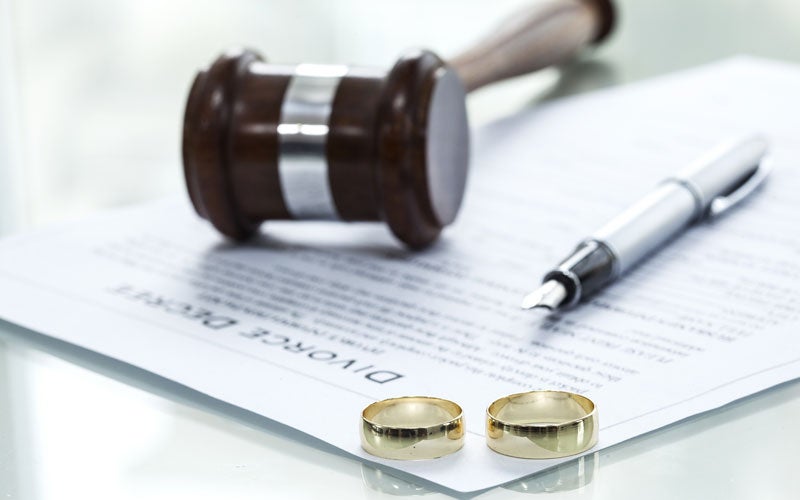
During stressful times as going through divorce proceedings, it is common to let important issues and accounts, such as insurance coverage, fall by the wayside. However, during this time, it is extremely important to take a close look at any and all insurance policies in order to foresee whether your insurance policies may be impacted once your divorce is finalized – in order for you to strategically prepare.
Below, we discuss the two main types of insurance that are typically relevant during divorce: health and life insurance.
When a couple is married, frequently, one spouse is covered in terms of their own health insurance on the other’s health plan. In order to help the spouse that does not earn an income after divorce, the purpose of the Consolidated Omnibus Budget Reconciliation Act (COBRA) is to allow them to continue the coverage under their ex’s plan for three years afterward.
However, while COBRA is convenient in terms of continuation of existing coverage, it is not necessarily the most affordable option. In addition, the time limit makes it somewhat impractical after a certain amount of time has passed.