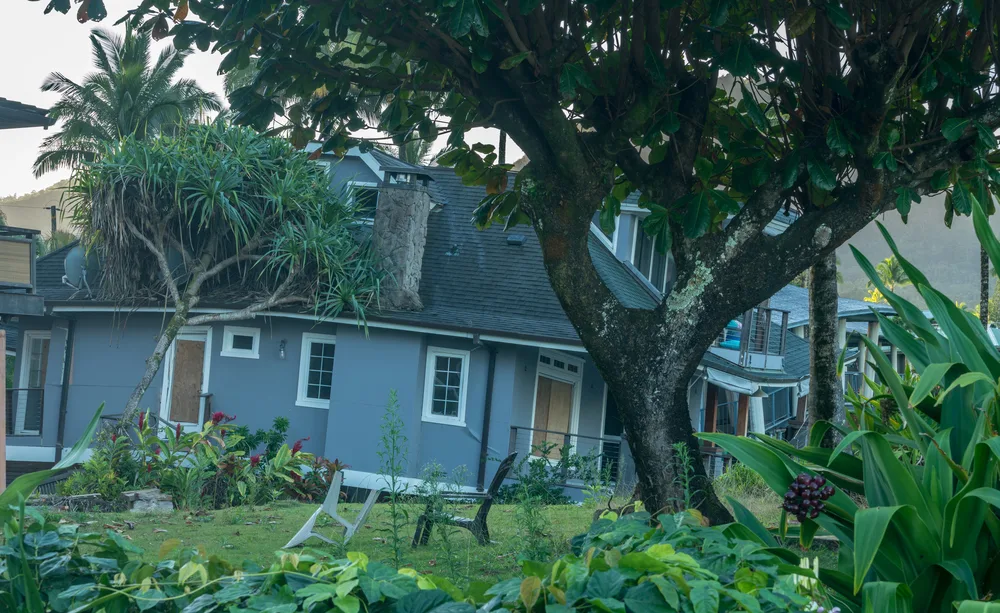
Tampa, FL is a wonderful place to live, but there’s no denying that storms and flooding are fairly frequent. If your property has been damaged, talk with a property & casualty attorney if you’re having any issues with your insurance company. Insurance issues are notoriously difficult to solve in our state, but an experienced lawyer can help.

What Are the Most Common Types of Property and Casualty Claims in Tampa, FL?

Water Damage

Possibly the most common claim of all is water damage, and that’s because water damage can come from so many issues. Storms, of course, are always a concern, and storm surges during hurricanes can inundate your property. We also have heavy rainstorms even when there is no hurricane, and don’t forget about issues within the house itself, like a plumbing failure or the malfunction of an appliance.

Wind and Hurricane

This is Florida, which means hurricanes and tropical storms are simply a reality of life. These storms bring strong winds that can damage windows, siding, your roof, and even the overall structural integrity of your home. Hurricanes often come with hail as well, and this can cause a huge issue with your roof and require expensive repairs.

Mold Damage

Given how frequent storms are and how much flooding is an issue, it’s not surprising that mold damage is a common claim here in Florida. Our environment is ideal for the growth of mold, and it can happen rapidly once water gets in, whether that’s because of a storm or a leak or just because your indoor humidity has gotten too high. Even if no water has actually entered, if a power outage takes out your air conditioning for enough days, mold can take hold.

Fire and Lightning Damage

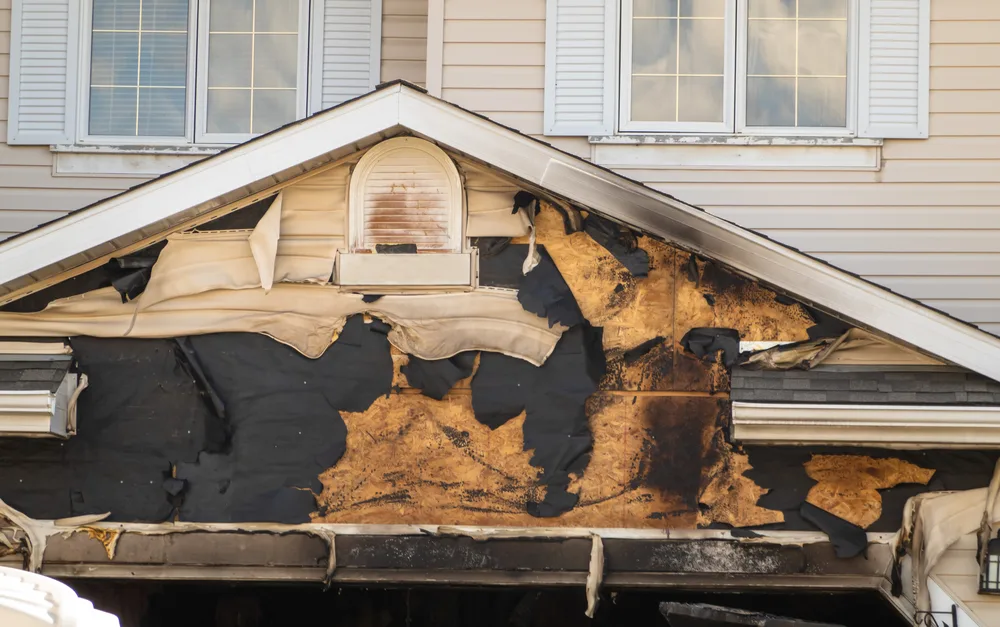
We usually think of the wind and the water damage first when we think of Florida storms, but Florida also has more lightning strikes than any state in the USA. Lightning strikes can start fires, and of course fires can also result from accidents and electrical issues. Fire claims can include not only repair of damage caused by the flames themselves but also secondary damage from smoke and from the water that’s required to put out the fire.

Vandalism and Theft

Florida is not unique in this area. It’s simply an unfortunate reality that some people tried to steal from others, and in doing so often caused damage to a home.

Contacting a Property & Casualty Attorney

Even if you have a valid claim, it’s not uncommon for the insurance company to either deny it or offer you a settlement that’s much too low. They may claim that the cause of the damage is not covered, that you don’t have enough documentation, or that you did not do enough to mitigate the damage once you realized it was happening.

Don’t try to go up against a powerful insurance company on your own. Reach out to the HD Law Partners in Tampa now for help. We also help clients in Fort Myers, Orlando, and Sarasota.

Whether you’re building your dream home or have just purchased a home that’s supposed to be brand new, poor construction work or materials that lead to structural defects can turn your dream into a nightmare. Contact a Sarasota, FL structural defects lawyer right away if you’re experiencing issues so we can get started on recovering the compensation you deserve under the law.

What Legal Options Are Available for Sarasota, FL Structural Defect Cases?

Contact a Structural Defects Lawyer

Everything starts when you talk to a lawyer. We can help you gather the evidence you need to prove that there are issues and then go through all the hoops that are required before you can bring a lawsuit. These are very important, and a single mess-up can destroy your case. If you don’t give the right notice, at the right time, if you miss a deadline, or you file something incorrectly, you might be left with no options. A lawyer will protect you from all these issues.

Sending Your Notice

Under Florida laws, your first step is to notify the developer of your property or your contractor about the defect. This is known as a Chapter 558 notice, and it needs to describe clearly where your property is located, the nature of each defect discovered, and all known damage that has resulted from this defect. Under the law, the contractor has 30 days to respond and get the property inspected. They have to fix the issue, settle the matter by compensating you, or bring a formal dispute against your claim.

Filing a Lawsuit

If the contractor does not get back to you within the required timeframe or the offer they make is unacceptable, then bringing a lawsuit becomes your next option. It’s usually better to settle without going to court if at all possible, but sometimes there’s no other option. An experienced lawyer will be able to tell you whether the time is right to bring a lawsuit, what to expect, and what the likely outcome will be.

Filing a lawsuit starts with filing a complaint. Then you enter a period known as “discovery.” During this time, both sides exchange evidence and documentation, get expert analysis, and request depositions.

During discovery, and even after it, you can engage in mediation or settlement discussions. If you’re able to come to a settlement at this point, it will usually be the best option, and if you have a strong case with lots of evidence, it’s likely you’ll be able to settle. But if no settlement is possible, the case will go to trial. At the trial, you can request damages to cover the cost of any repairs you’ve had to make, reimbursement for any temporary housing that you had to get, reimbursement for your attorney fees in some cases, and compensation for the diminished value of your property.

If you’re facing a home with defects, you don’t have to just live with it. Reach out to HD Law Partners now for help in Sarasota, Tampa, Fort Myers, or Orlando.

Florida has some busy roads, and we have a lot of car accidents here in Bradenton, FL. Understanding how auto liability works is important to protecting your rights, and you should talk to an auto liability lawyer quickly if you’ve been in an accident.

From an Auto Liability Lawyer: Auto Liability in a Bradenton, FL Car Accident

Florida has a no-fault insurance system. All drivers in Florida are required to carry personal injury protection insurance, or PIP. The law requires that this insurance cover 80% of your medical expenses, 60% of your lost wages, and provide $5,000 in death benefits to your beneficiaries if an accident should be fatal. PIP is supposed to cover drivers no matter who is responsible for an accident.This rule means that there are fewer liability claims in Florida, particularly with small accidents, but it does not do away with liability completely. When someone is responsible for an accident and there is property damage (which isn’t covered by PIP), the responsible person can be held liable. Their property damage liability (PDL) coverage would kick in at this point. This is also a requirement in Florida, and all drivers need to have at least $10,000 of PDL coverage.Bodily Injury Liability (BIL) coverage, however, is optional for most. BIL coverage provides liability coverage for causing injury to another person that exceeds what PIP can cover. That’s because ,when injuries are bad enough, victims in Florida are allowed to “step out” of the no-fault system and bring a liability claim against the at-fault driver.

Auto Liability Threshholds

In order for an injured party to bring a liability claim, they have to have injuries that go beyond the threshold for “serious” laid down in Florida law. Their injuries must be one of the following:

  • A significant and permanent loss of an important bodily function
  • A permanent injury, excluding scarring or disfigurement
  • Significant and permanent scarring
  • Death

In most cases, victims have two years to bring a claim after an accident. If you don’t bring a claim within that time limit, you won’t be able to bring one at all except in rare cases. Extensions are usually only granted if the injured person was legally incapacitated at the time of the accident (such as if they were in a coma after the accident), if the responsible driver left Florida before the lawsuit could be filed (in which case the time limit begins when they return or it becomes possible to bring a lawsuit), or if the responsible driver hid, changed their name, or otherwise attempted to avoid being served with the lawsuit.

Property Damage Liability

When it comes to property damage, there is no threshold that needs to be met. PDL liability applies immediately to whoever is at fault for the accident, and their PDL coverage should reimburse the other party for vehicle damage or property repair up to the limits of the policy.Things can get complicated in any car accident. If you’ve been in a wreck, contact HD Law Partners in Tampa, FL now for help. We also serve clients in Fort Myers, Sarasota, and Orlando.

September 10 marks the one-year anniversary of Hurricane Irma and the devastation it left in Florida. As we circle back to this date, it is crucial for a number of families and businesses that experienced damages due to the hurricane to think about potential hurricane claims, insurance policies, and deadlines to recover benefits.

After Irma, many businesses were simply focused on getting back up and running again. Filing an insurance claim was, for many, an overwhelming task to add to the chaos, especially given the many questions that had to first be answered before the claim could even be filed; questions such as: what losses can/should be claimed, under what provisions, am I covered for flood issues, etc. This only became more complicated by the many responses received by insurance companies, which sometimes refused to honor claims altogether—indicating that the policyholder had no coverage—for unclear reasons.

Below we discuss some of the issues that you and your attorney should discuss in attempting to identify any potential past and future claims:

Figuring Out Business Interruptions

When trying to figure out whether your business experienced any interruption, and if so, when that began, your instinct might be to assume that this is the date Irma made landfall. However, in order to properly protect yourself, you need to be a bit broader in this perspective, as also look at how business was disrupted long before even the first wind reached shore. For example, in many parts of Florida—including areas such as Miami-Dade County—businesses and residents were also under strict evacuation order before Irma fell.

You will also want to discuss the following issues with your hurricane insurance claim attorney: the period of time necessary to rebuild, repair, or replace the damaged property, the length of time that lost income is covered, any areas of uncertainty, such as accounting history to establish revenue from prior years, etc.

What about the Statute Of Limitations?

While the statute of limitations for breach of contract under Florida law is five years, there are often exceptions hidden within the insurance policy itself.  Some policies effectively replace the state statute of limitations with extremely short windows, such as providing only one year to file a lawsuit over any unpaid proceeds.

Other surprises can stem from when this period starts to run—i.e. does it run from the date Irma made landfall, or when the insurer issued its coverage decision? This is connected to—and can similarly affect—policies that require pre-suit mediation, or impose waiting periods if negotiations have failed. As a result, some policyholders do have to decide—sooner rather than later—whether to accept an offer, abandon a claim, or litigate.

Do not try to Navigate in the Dark: Speak with an Experienced Hurricane Insurance Claim Attorney

If you suffered due to hurricane Irma, do not let yourself be overwhelmed by surprises.Contact one of our experienced Florida hurricane insurance claim attorneys at HD Law Partners to get the help you need from the insurance policy you have dutifully paid in order to rebuild your life.

Resource:

law.com/dailybusinessreview/2018/08/14/clock-ticks-for-irma-insurance-claims-dont-leave-money-on-the-table/

While there are frequently insurance disputes over coverage, damages, or liability – sometimes claims alleging insurance bad faith or plaintiffs seeking extra-contractual liability – there is no comprehensive definition of “good faith” in Florida; therefore, the full extent of what a “showing of good faith” means remains unresolved when it comes to liability insurers declining to cover the insured against whom a third party has asserted a claim.

The Eleventh Circuit has perhaps provided the most comprehensive definition, in stating that “Coblentz” agreements (settlement devices that can be used only when an insurer refuses to defend an insured) must be free from bad faith, collusion, and fraud, and entered with efforts to minimize liability. Still, those who defend insurers—and insurers themselves—are still left wondering what type of evidence specifically demonstrates that a Coblentz agreement should not be enforced for a lack of good faith.

Examples: Lack of Good Faith

Previously, Florida courts have found that there is a lack of good faith (in the form of collusion) and an absence of efforts to minimize liability in the following types of scenarios:

  • Where the claim involved covered and non-covered damages, and the claimant failed to meet their burden of showing that only covered damages were allocated to the settlement;
  • Where there was no exchange of information between the parties to the Coblentz agreement regarding the decedent’s work-life expectancy or the financial situation of the decedent;
  • Where the insured failed to engage in even the most basic discovery; and/or
  • Where the record was lacking in any evidence of how and when the insured negotiated for any reduction in a settlement proposal to minimize liability.

Still, confusion remains as to what exact evidence is necessary to rise to the level of proving that a Coblentz agreement is unenforceable for lack of good faith. While the claimant carries the burden of proof to enforce the agreement, the extent of conduct that an insurer is required to show in its lack of good faith defense remains unclear. The trend tends to be that insurers have to bring their defenses before a jury instead of leaving the decision up to a judge, and they will be provided with broad latitude in obtaining the discovery they need to defend against the enforceability of a Coblentz agreement. Ultimately, a settlement may not be enforced against the insurance carrier if it is unreasonable in amount or tainted in bad faith.

Florida Insurance Bad Faith Attorneys

Insurance companies have a duty to their shareholders to operate efficiently and prudently. This involves working with experienced insurance bad faith attorneys to thoroughly investigate claims and diligently represent insurance carriers when good faith disputes arise. If you are an insurer involved in or potentially facing a bad faith insurance dispute, contact our insurance bad faith attorneys at HD Law Partners today to find out how we can help.

Resources:

insurancejournal.com/news/southeast/2018/05/17/489331.htm

The U.S. Court of Appeals for the Eleventh Circuit (which covers Florida) recently reversed an important lower Florida court’s decision which awarded an insurance bad faith plaintiff (Bottini) $30 million in a case involving uninsured/underinsured motorist breach of contract claims.

The vehicle involved in the accident at the heart of the claim had been underinsured under the requirements of Florida law; still the plaintiff’s estate demanded that Geico, from which the plaintiff had purchased $50,000 of uninsured motorist coverage, render the maximum payment under the policy. Geico refused, indicating that it was still conducting its own investigation to determine whether the insured had been at fault in the accident. As a result, the motorist’s estate filed a civil remedy notice of insurer violation with the Florida Department of Financial Services (a prerequisite to filing a bad faith claim against an insurer). 

Florida Law

Under Florida law, a person may bring a civil action against an insurer when said person is damaged by a violation of the following:

  • Unfair methods of competition and unfair or deceptive acts, such as misrepresentation and false advertising of false insurance policies, defamation, coercion, false statements, etc.
  • Coercion regarding being associated with a particular financial institution;
  • Disability and/or sickle-cell-based discrimination;
  • Policies regarding cancellation and the return of an unearned premium;
  • The insurer not attempting in good faith to settle claims when the insurer could and should have done so;
  • Failing to properly settle claims; and/or
  • Making claims payments unaccompanied by a statement setting forth the coverage under which those payments are being made.

The Case

Geico ultimately found that the plaintiff was negligent in the accident, but still sent the plaintiff’s estate a check for the full $50,000, including a release of liability for related claims. However, the estate rejected the check and instead chose to litigate the dispute behind what had ultimately caused the accident. When the case came before a jury, the jury awarded more than $30 million damages to the estate, the plaintiff’s widow, and the plaintiff’s children for loss of support, services, companionship, and pain and suffering. However, the trial court still limited the damages to $50,000 because $50,000 was the policy maximum.

The estate then sued Geico in the U.S. District Court for the Middle District of Florida, arguing that it was entitled to the full amount of damages designed by the jury (upwards of $30 million). The district court granted the motion, holding that the verdict was binding. The circuit court then reversed the district court’s order, finding that the appellate court did not review the errors Geico alleged, failing to provide the appellate review to which Geico was entitled to under Florida law. In doing so, Geico had been denied its right to appellate review of properly preserved claims of error in the determination of damages.

Florida Insurance Bad Faith Attorneys

The experienced insurance attorneys of HD Law Partners represent insurance carriers in all types of insurance coverage disputes, including defense of bad faith claims and good faith disputes of liability, coverage, and/or damages. We understand that insurance companies have a duty to defend their bottom line and investigate all claims at a high level for the sake of the company’s other customers. We provide representation to insurance companies being targeted under these claims and others. Contact us today to find out more.

Resource:

leg.state.fl.us/statutes/index.cfm?App_mode=Display_Statute&URL=0600-0699/0624/Sections/0624.155.html

In Florida, property owners have a legal duty to keep their premises reasonably safe for guests, visitors, and customers. This duty includes the obligation to have adequate security measures in place. Unfortunately, some property owners fail to provide appropriate security to individuals who enter their property.

At HD Law Partners, our knowledgeable Florida private security & law enforcement liability attorneys represent clients who have been injured due to negligent security as well as entities who have been wrongfully accused of failing to provide adequate security.

We also defend law enforcement officers and agencies facing liability due to “wrongful acts” and represent victims of police misconduct whose civil rights have been violated.

Speak with our private security and law enforcement liability attorneys at HD Law Partners to discuss your particular case. Call 813-964-7878 or fill out our contact form to get a free consultation.

What is Negligent Security?

Negligent security cases, also referred to as inadequate security cases, are a form of premises liability action that deals with residential and commercial property owners whose failure to provide the right level of security results in injuries and damages to visitors, guests, and customers.

Under Florida premises liability law, property owners have an obligation to protect people who enter their property from third-party crimes as long as the crimes were foreseeable.

Proving that an act of crime was foreseeable and preventable is usually the toughest part in negligent security cases. That is why it is vital to seek the legal counsel of an experienced attorney to help you hold the property owner liable for your damages and losses.

Who Can Be Held Accountable for Negligent Security?

As mentioned earlier, both residential and commercial property owners can be held liable in negligent security cases. Places where visitors, guests, and customers can get injured due to foreseeable crimes perpetrated by third parties include:

  • Parking lots
  • Grocery stores
  • Bars
  • Restaurants
  • Shopping malls
  • Hospitals
  • Airports
  • Schools
  • Apartment buildings
  • Government buildings
  • Sports venues
  • Concert venues

Negligent security can contribute to crimes such as:

  1. Robbery
  2. Shooting
  3. Assault
  4. Sexual assault
  5. Rape
  6. Stabbing

When a visitor is injured in a foreseeable criminal activity on a residential or commercial property, they can sue the owner of the property for inadequate security measures.

Examples of Negligent Security

A property owner can be held liable for the injuries and damages incurred by visitors, guests, and customers as a result of their failure to provide sufficient security. Common examples of negligent security include a property owner’s failure to:

  1. Install, fix, or monitor security cameras
  2. Respond to security alerts in a timely manner
  3. Provide adequate lighting on the property
  4. Hire or train security guards
  5. Fix broken windows, doors, locks, gates, and barriers
  6. Lock gates to prevent third parties from entering the property
  7. Warn visitors of known risks and hazards

If your injury was caused by a third-party crime on someone else’s property, you might be able to hold the property owner liable for your injuries due to their failure to have adequate security measures in place. Consult with an attorney to discuss your legal options.

Why You Need a Private Security Attorney

It can be tough to prove the property owner’s liability in a negligent security case. That is why it is critical to have a skilled attorney on your side if you or your loved one has sustained injuries due to the property owner’s failure to provide adequate security.

An experienced private security attorney can help you prove your case and recover the following types of damages on your behalf:

  • Medical expenses
  • Lost wages
  • Pain and suffering
  • Property damage (e.g., your phone was stolen or damaged in a crime)
  • Emotional distress
  • Disability
  • Disfigurement

These and other damages may be available in your negligent security case if your attorney can prove the property owner’s liability for third-party criminal activity.

Law Enforcement Liability Cases in Florida

Law enforcement liability cases are based on allegations of:

  • Use of unreasonable or excessive force
  • False arrest
  • False imprisonment
  • Negligent training or discipline
  • Malicious prosecution
  • And others

Due to the serious nature of the allegations, law enforcement liability cases require in-depth investigation. Often, these cases result in lengthy trials and complex litigation processes.

What is Law Enforcement Liability?

The term “law enforcement liability” refers to the potential culpability for damages which may result from wrongful acts on the part of law enforcement officers and departments.

Covered acts may include:

  1. Use of excessive force
  2. False arrest & imprisonment
  3. Invasion of privacy

Covered acts vary from one agency to another and may or may not involve specific insurance coverage.

What if You Are a Victim of Police Misconduct?

Our attorneys at HD Law Partners also represent victims of police misconduct. If a law enforcement officer or department violated your civil rights, our attorneys are committed to fight for you and hold the liable parties accountable for their wrongful acts.

We represent victims of the following types of police misconduct:

  • False arrest. Law enforcement officers must have either a warrant or probable cause to arrest someone. When a police officer fails to follow proper procedures when arresting a person, they can be sued for false arrest.
  • Malicious prosecution. Citizens can sue law enforcement for malicious prosecution when the police violate their constitutionally protected right to liberty.
  • Use of unreasonable or excessive force. Many police misconduct cases are based on allegations of excessive force. While law enforcement officers can use a reasonable amount of force, that amount cannot exceed that which was reasonably necessary under the totality of circumstances.
  • Failure to intervene. When a police officer witnesses another officer violating someone’s civil rights but does not do anything to stop police misconduct, they can be held responsible for failure to intervene.

Contact a Florida Law Enforcement Liability Attorney

At HD Law Partners, our attorneys have successfully defended law enforcement agencies and officers in liability cases for over 10 years.

We have a track record of success in representing both Plaintiffs and Defendants in law enforcement liability cases. While we are committed to protecting the officers who act properly, we are also dedicated to helping the citizens whose civil rights have been violated.

Schedule a consultation to discuss your case with our law enforcement liability attorneys. Call 813-964-7878 to get a free case review.

At HD Law Partners, our Florida business interruption insurance defense attorneys are committed to providing top-quality, results-focused legal representation to clients. We have the skills, experience, and knowledge to defend the full range of business interruption claims. With a staff large enough to take on any case, our team is ready to protect your interests. To set up a strictly confidential consultation with an experienced Florida insurance defense lawyer, please contact us today.

An Overview of Business Interruption Claims

Business interruption coverage is designed to help companies make it through difficult times. When a covered peril disrupts the operations of the business—thereby leading to partial or total losses in revenue—business interruption coverage provides much needed financial protection. As a general rule, a company’s pre-loss earnings serve as the basis for reimbursement through a business interruption claim.

Each business interruption claim requires an in-depth investigation. As a starting point,it is important for insurers to confirm that the commercial policyholder’s claim is actually covered by their business interruption policy. Certainly, this type of coverage is not a blank check for all losses—policies have specific terms, conditions, and exclusions. Additionally, an investigation is needed to determine the appropriate payment for a valid claim.

Coronavirus (COVID-19) and Business Interruption Insurance Defense

The coronavirus (COVID-19) pandemic has resulted in the temporary closure of many businesses in Central Florida and South Florida. In many cases, coronavirus-related losses are not a covered loss under a business interruption policy.

While each policy and claim must be assessed on its individual merits, it is not uncommon for these policies to explicitly exclude coverage for viruses, pandemics and similar outbreaks. Insurers facing a dispute over COVID-19 and business interruption coverage should consult with an experienced Florida insurance defense attorney immediately.

How the Insurance Defense Attorneys at HD Law Partners Can Help

Business interruption claims are complicated. With the COVID-19 (coronavirus) pandemic, many policyholders may try to file claims despite not qualifying for coverage. At HD Law Partners, we have deep experience handling a wide range of coverage disputes. When you call our law firm, you will speak to a Florida business interruption insurance defense lawyer who is prepared to:

  • Conduct a comprehensive, confidential assessment of the case;
  • Review the policy and investigate the claim;
  • Evaluate all coverage defenses; and
  • Craft an approach to help clients achieve the best possible outcome.

We firmly believe that no two coverage disputes are exactly alike. Our Florida business interruption defense attorneys offer our clients the attentive and personalized representation that they need. We will develop and execute a strategy that best produces a timely resolution to your dispute.

Call Our Florida Business Interruption Insurance Attorneys Today

At HD Law Partners, our Florida business interruption insurance attorneys are trial-tested advocates. Our goal is to help clients resolve claims in the most efficient, cost effective manner possible. For a free, completely private consultation, please contact our legal team today. With offices in Tampa, Bradenton, Fort Myers, and Orlando, we represent clients throughout Florida.

As attorneys who regularly advise and represent homeowners’ associations here in Florida, we frequently receive questions about the balance between what homeowners can do with and without the approval of the homeowners’ association; for example, whether they can install surveillance cameras outside of their homes and/or in common areas. While security is of course a concern for a number of homeowners, homeowners’ associations must also look out for the privacy concerns of all owners, which leads to the balancing that must be done by the association and their attorney(s).

The General Rules

As a general rule, only the homeowners’ association can install anything in common areas. In addition, for owners to be able install anything such as security cameras outside of their own homes, they should always look at their bylaws and declarations first to see what these documents indicate. They are usually drafted by homeowners’ association attorneys and are very specific as to what owners must first obtain approval for when it comes to exterior changes.

Getting Approval for Installing Surveillance Cameras Outside of One’s Home

A surveillance camera is most likely going to be included in this list, whereby a failure to first obtain written approval before installing – even outside of one’s own home – could result in legal issues. And if the association does ultimately provide approval for the camera, they are going to need to make sure that they include the proper restrictions that protect neighbors’ privacy; as well as any other restrictions that ensure that there won’t be a ‘nuisance’ created; for example, motion sensitive exterior lights being triggered by the camera, for example. In addition to having to look out for privacy, associations must also be cognizant of nuisance issues and ensure that no one owner uses their property in such a way as to disturb the peace, quiet, and comfort of other owners.

Asking The Association To Put Up Cameras For Safety

Also note that it is never going to be the duty of the association to install surveillance cameras like these unless there are safety and security issues; such as a known history of criminal activity in a common area. For example, if a homeowner approaches the association in response to recent criminal activity and asks it to install cameras, the association must first consult their attorney before moving forward and responding. Similarly to the concerns that apply when individual owners want to set up cameras outside of their own residence, anything like this that is installed must be done so carefully so as to not violate any homeowners’ privacy. In addition, the attorney can also inform the association regarding whether any additional notifications are necessary, such as signs, or notices of hearings to inform and gather feedback from other homeowners first.

Ultimately, if surveillance cameras are installed and common areas, the board should also adopt a written policy that addresses the following, at a minimum:

  • What will happen with any footage that is created;
  • Who will have access to that footage and under what circumstances it will be turned over to law-enforcement; and
  • How long will recordings be kept before being destroyed.

Reach Out to Us Today for Help

Our Tampa homeowners’ association attorneys have provided knowledgeable legal advice and representation to a number of associations throughout Florida. Contact us at HD Law Partners today to find out more.

Resource:

washingtonpost.com/business/2019/09/03/can-an-owner-homeowners-association-install-security-cameras/

https://www.hdlawpartners.com/florida-residents-homeowners-association-disputes-over-painting/
Motorcycle accident

Accidents are scary, traumatic events. Drivers do what they can to avoid them in order to keep themselves, their passengers, and others they are sharing the roads with safe. But there are times when collisions occur, and sometimes it is because a Florida driver forgot to check their blind spot or didn’t do so effectively.

Merging and lane changes can lead to sideswipe accidents. If you are recovering from injuries sustained when the side of your car or truck was struck by another vehicle, talk to a Tampa personal injury attorney. An experienced lawyer can help you obtain the settlement you need to pay off expenses connected to accidents, whether you were involved in a sideswipe accident, rollover event, or rear end crash.

Understanding Blind Spots and Accident Risks

The zones around your car you are unable to see when you are seated correctly at the wheel of your vehicle are your blind spots. For example, you can see what is in front of you and what is available through a glance at your side mirrors and rear view mirror, but your mirrors do not reflect every area. To check your blind spots, you need to, safely, turn your gaze over your shoulder.

In driver education classes, blind spot zones and how to correctly check them is covered extensively. Even though people learn this in the driver’s education process, many fall into bad habits once they obtain their license. Merging into traffic or changing lanes creates accident risks. Doing so safely is essential.

Blind Spot Neglect and High Speeds

Any accident that happens at high speeds can lead to extensive harm and serious injuries. If a person is traveling quickly and changing lanes, and fails to check their blind spot, they could sideswipe another vehicle. The force of this collision could even prompt a rollover.

It is possible an insurance company adjuster will contact you and offer you a settlement following a sideswipe accident, rollover, or other collision that occurred as a result of blind spot neglect. While the adjuster may tell you the best thing you can do for yourself is to settle as soon as possible, they may not be seeing all of the compensation possibilities. When you work with a Tampa personal injury attorney, you will have an expert advocating solely for your needs each step of the way. Your lawyer could see a path to a larger recovery package.

Were you sideswiped because a Florida driver did not check their blind spot and recklessly changed lanes? A legal professional can guide you through the personal injury claim process and will work to be sure you obtain a full and fair recovery package. When you are ready to have an expert on your side, connect with the experienced legal team at HD Law Partners. Seasoned attorneys are familiar with the specifics of personal injury cases, including sideswipe accidents. Let our attorneys assess your documentation so next steps can be strategized. Call 813-964-7878 to schedule a free consultation.