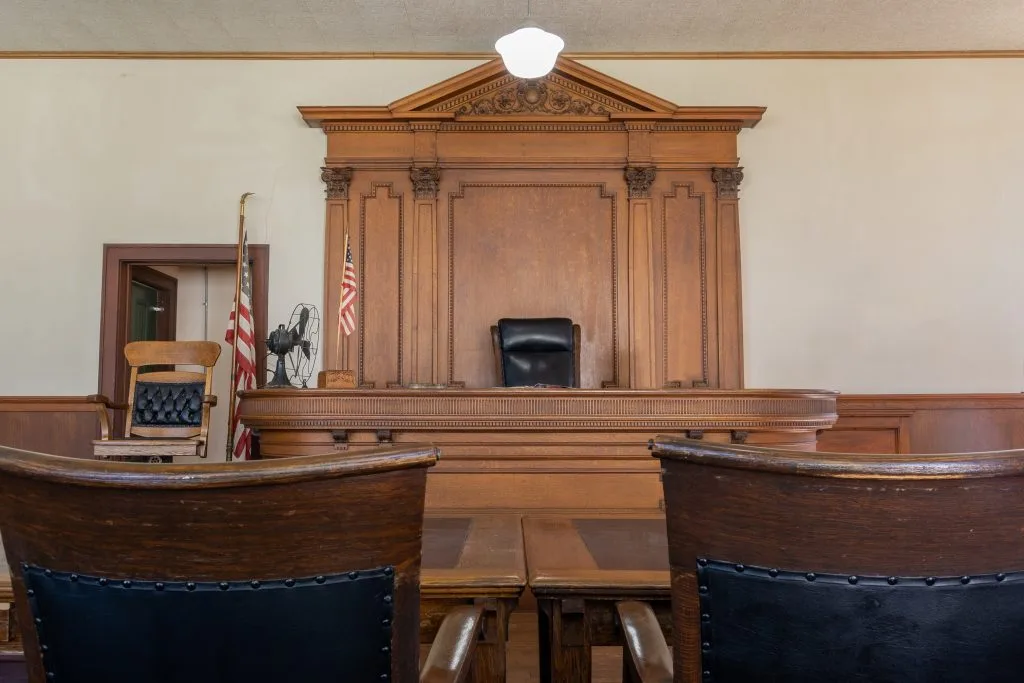
If you are currently going through a divorce or are contemplating a divorce, you may wonder how it may be possible to avoid an alimony award. Under Florida law, there are five types of spousal support:
Alimony is not awarded in 100% of all divorce cases in Florida. That is why it is important to understand the circumstances in which you could be able to avoid an alimony award. Speak with a Tampa alimony attorney at HD Law Partners to help you understand how you can avoid paying alimony and keep more of the money you earn to yourself.
There are five situations when you may be able to avoid an alimony award in Florida. Let’s take a look at each of them.
Under Florida law, courts will consider each party’s financial resources and earning capacity prior to awarding alimony. Thus, if you do not earn more than your spouse, you will most likely not be ordered to pay alimony unless you voluntarily quit your job or take a pay cut to avoid paying spousal support to your soon-to-be-ex-spouse.
Typically, landlords inform tenants of a no-smoking policy or restrictions on smoking cigarettes and marijuana in a rental unit before signing the lease or rental agreement.
However, does a no-smoking policy infringe upon your rights as a tenant? Do you actually have a right to smoke cigarettes and weed in your rental apartment despite the restrictions in the lease/rental agreement?
Why do landlords prohibit smoking in rental units?
There are multiple reasons why landlords include no-smoking policies in the lease agreements and prohibit tenants from smoking cigarettes and marijuana in their rental units:
Do tenants have a right to smoke tobacco/marijuana in rentals?
As a rule of thumb, no. Tenants do not have a right to smoke in their rental units. Currently, there is no state or federal law that would protect tenants’ right to smoke tobacco or marijuana in their rentals. Also, bans on smoking in the rental unit are not discriminatory since the word “smoker” is not a protected characteristic under the Fair Housing Act (FHA).
If your landlord fails to make necessary repairs or violates housing codes, you may be thinking about stopping to pay rent. But are you legally allowed to do that in Florida without facing an eviction notice?
What Are the Obligations and Duties of Your Landlord?
In Florida, landlords are legally required to comply with housing, building, health codes, laws, and ordinances. The exact duties of your landlord depend on whether you rent an apartment, home, or commercial premises.
If you live in an apartment building, your landlord is required to provide or ensure:
If you live in a standalone home, it is important to review your lease agreement. Many landlords delegate many of their duties and obligations to tenants.
What to Do if Your Landlord Fails to Make Repairs?
If your landlord violates housing codes or fails to make necessary repairs or keep the environment clean and free of hazards, you should discuss your options with a competent landlord & tenant attorney in your city.
Clarifying the Florida Supreme Court’s March Administrative Order suspending the requirement for clerks to issue writs of possession, in April, Gov. Ron DeSantis signed an executive order suspending evictions and foreclosures for 45 days (from April 2) due to the coronavirus pandemic. While landlords have been sending out eviction notices at this time, they will only be executed once the moratoriums are lifted. It is also important for tenants to note that they are still contractually obligated to pay any back rent owed; usually within five days.
Still, there appears to be confusion as to whether DeSantis’ Order only applies to residential tenants or both commercial and residential tenants. The Order specifically suspends and tolls any statute providing for:
Indicating that the order does not apply to commercial tenants.
Commercial Landlords May Still Be in Need of Creative Options If Tenants Are Having Difficulties at This Time
Florida lawmakers are currently considering a bill that would affect a number of commercial landlord and tenant issues by addressing the ability for tenants to keep emotional support animals. Specifically, while it would prohibit landlords from charging more for emotional support animals, it would also allow them to ask for proof and hold a pet owner liable for any damage that they cause to property. In addition, the legislation mandates that any pet owners who obtain fraudulent letters in order to keep their pets as emotional support animals would also be penalized.
The bill has come about in part as a result of commercial landlords complaining that people are exploiting their ability to simply keep a pet with them at all times by claiming that they are emotional support animals.
For legal purposes, it is important to distinguish between service dogs covered under the Americans with Disabilities Act (ADA) and emotional support dogs. The ADA dictates that individuals with disabilities may have their service animals in all areas that constitute “public accommodations,” such as stores, restaurants, schools, hotels, apartments, etc. These animals are specifically trained to assist someone with mental, physical, psychiatric, intellectual, or other disability, and the animal’s work must be directly related to that. For example, if someone is blind, they may have an animal that helps them cross the street.
As Florida attorneys who provide legal representation to homeowners’ associations (HOA), while also representing those affected by a foreclosure proceeding, the issue of homeowners’ associations foreclosing on homes over unpaid fees can be a challenging one that affects more people than you realize; especially since some 30 to 40 percent of the country lives in homeowners’ association communities. Many people and possibly even some homeowners’ association do not realize that in Florida and a number of other states, if you fail to pay assessments and dues, the association can obtain a lien on your property that leads to foreclosure. In fact, most people think that only their mortgage lender can seize their property.
However, the law also dictates that the association cannot file this lien unless it first provides the homeowner with 45 days to pay what they owe via a written demand. Still, in its assessments lien, it can not only include unpaid assessments in the lien, but also late charges, interest, and attorneys’ fees. Defaulting on assessments means that the association can foreclose by filing a lawsuit, even if you are current on your mortgage payments. This is why – if you are involved in a disagreement with your association – failing to pay fees is not the way to address the disagreement; rather, speaking with an attorney to discuss your options makes more sense; especially since it can be difficult to even figure out how much is actually owed to the HOA.
As commercial landlord and tenant attorneys who help ensure that landlords have enforceable commercial leases and experienced counsel to help with any disputes, one of the issues that we frequently assist landlords with here in Florida are common area maintenance, or “CAM” charges. These charges have a significant impact on the property’s net operating income and how much tenants pay. However, disputes can arise with tenants when it comes to CAM charges because unique situations may require costs to be calculated in a way that is different than what is spelled out in the current lease terms. As a result, it is important for commercial landlords to have a thorough understanding of what CAM charges are/include and how to properly account for them in the lease, with the assistance of an experienced attorney.
Below, we discuss what CAM charges are, what’s included in them, the types of commercial real estate leases that do and do not include them, and how they are calculated:
An important landlord and tenant case decided in December could have an effect on landlords around the country. The court specifically held that landlords can be held liable under the Fair Housing Act if they fail to reasonably address tenant race discrimination from other tenants. This is the first time the law has been expanded beyond direct action by landlords and allowed for landlords to be held liable for actions committed by third parties.
The case involved a tenant who allegedly experienced egregious discriminatory harassment from his next-door neighbor, who remained a tenant in the building even after he was arrested by police for aggravated harassment and a protective order was entered against him.
What The Fair Housing Act Says
The Fair Housing Act prohibits discrimination “by direct providers of housing,” such as landlords and real estate companies, as well as those in connection with the housing, such as banks and lending institutions, if/where discriminatory practices make housing unavailable to someone due to:
We’ve all had or heard our fair share of horror stories when it comes to landlord-tenant issues: renters who failed to pay rent, applicants who claimed they were discriminated against, people who claimed that they were injured on the property, etc. As a commercial landlord, there are several basic steps that you want to take before you rent to any tenants, and as attorneys who regularly help landlords with commercial leases, eviction proceedings, and other legal issues that come up, we emphasize taking these initial steps with our landlord clients, and discuss them below.
Read up on the different issues that landlords encounter and how to minimize risk, including the good, the bad, and the ugly. This includes the full gamut of issues: how to screen potential tenants, your rights as a landlord, etc. Also try to speak with experienced landlords and learn from their mistakes, for example, the pros and cons of renting to friends.
As commercial landlord and tenant attorneys, we frequently have clients approach us asking about how to handle a commercial eviction proceeding for tenants who have failed to pay rent. Commercial property lawyers can be especially helpful in not only helping you draft the right commercial lease before your tenants move in so that you have adequate safeguards in place in the face of a worst-case scenario, but also in helping to advise you on what your rights are, as well as managing irresponsible tenants, if that worst-case scenario occurs.
Landlords have to be careful when it comes to evicting commercial tenants because, if it is not done in accordance with what procedures the law dictates, you can get into significant trouble. Below, we describe some steps you can take – ideally with the assistance of a commercial landlord attorney – to address the issue of tenants not paying rent:
The documents that you set up with your tenants are one of the most important aspects of your rental (or lease) agreement with them, as well as the safeguard you have to ensure that you are protected. Therefore, you not only want to invest time and resources into making sure that document says what you want and addresses issues that may come up—such as what happens to those tenants if you need to move into or sell the property—you also want to spend some time rechecking those documents and records before you take formal steps to evict these tenants. This is because, where specific terms are not spelled out in the agreement, state-mandated terms apply. While Florida law does not mandate that landlords provide tenants with any grace period within which their rent can be late (even though some states do), it is common for landlords to offer a five-to-seven-day grace period after it is due.
As attorneys who frequently represent homeowners’ associations here in Florida, we often see associations challenged on what are known as special assessments. These assessments are often necessary, still, there are tactics that associations can use in order to mitigate some of the effects and avoid litigation from owners in some circumstances, as we discuss below.
Special assessments are fees that are charged in addition to regular fees that are expected; typically to make up for budget shortfalls. While regular dues are charged monthly or quarterly, in order to keep the community running in terms of operating expenses such as electricity, exterior maintenance, insurance, landscaping, management, and others, associations also keep reserves to fund such expenditures such as street repaving and roof replacement. Reserve needs are determined by reserve studies, which determine the schedule for repairs over a 30-year timeline, as well as estimated costs. Florida requires condo associations to have reserves studies performed once every three years, however homeowners’ associations typically only have the studies done as often as what their governing documents require.
When it comes to being a landlord preparing your property to be rented by tenants, there are a number of helpful tasks that a landlord-tenant attorney can help you with. This includes precautions that will likely provide you with more protection than simply working with a property management company that does not have any experienced attorneys on staff.
Let’s take, for example, the task of finding your tenants: Let’s say you and/or the property management company having potential tenants that appear to be good on paper, but also appear to have bad credit. An attorney can help you build in some protection for yourself in case these tenants do not work out. Start by running through their references, and remember that a credit score does not tell the whole story, especially if someone experienced a couple of difficult years. You can ask their references about what is important as a landlord—did they pay rent on time, respect the premises, etc. —and then ask the tenant for additional specifics as to why their credit score might be low.
Some of the many landlord-tenant legal issues that we deal with have to do with landlords who are ready to sell their property that is currently being rented by tenants. Below, we discuss some of the options that you as a landlord have to do so; based on what type of lease agreement you have with your tenants; and how to deal with any bumps that might come along during the process:
Month-To-Month Leases
A month-to-month lease is arguably the best situation for a landlord because you usually only have to provide between 30 and 60 days notice to your tenants. However, first and foremost, you must ensure that you abide by the terms of your lease, including any particular provisions that were put in. Not only is it the law, but being respectful and keeping your tenant(s) informed can only help you with the selling process.
That being said, make sure you also ‘dot the i’s and cross the t’s,’ and put everything in writing, including a reminder of what date their lease ends and the date by which the tenant(s) need to move out and return the keys to you.
Unfortunately, homeowners’ and condo association lawsuits against Florida construction companies and developers for construction defects and other abuses (breach of implied warranties, negligence counts, violation of minimum building codes, etc.) are far too common.
In June, when the “Loft 2” condominium in downtown Miami was constructed with some serious flaws—such as defects in the air conditioning, heating, and ventilation, and malfunctioning fire sprinkler heads—the association filed a lawsuit against the general contractor, Whiting-Turner Contracting Co., as well as a number of associated subcontractors, such as the fire sprinkler contractor, Century Fire Protection Inc., alleging the companies failed to build the condo according to building plans and Florida Building Code standards. Other problems facing the association included defective longitudinal seam welds in the piping, improperly condensed water systems, lack of water treatment, premature unit pump failures, and rusting and scaling of pipes; all of which failed to meet minimum standards. Below, we discuss some of these claims in greater detail.
First and foremost, it is crucial to understand that, once a tenant files for bankruptcy, landlords and other parties are prohibited from taking any action against the tenant (i.e. debtor) unless it is first approved by the bankruptcy court. However, if a tenant is in default prior to filing for bankruptcy, and the landlord takes every step required under state law to terminate the lease before they file, the lease is then not subject to the tenant’s bankruptcy case. This is because it is the act of the tenant filing for bankruptcy that imposes an automatic stay against any actions by landlords and other parties (where actions are any activities involving collecting, demanding, or otherwise seeking to recover amounts due).
The general rule is that if the proposed change is a palpable change to the appearance, function, or use of the association property and/or its common element, it constitutes a material alteration. If a homeowners’ association wants to make a material alteration, it must first obtain membership approval. Some examples of material alterations that require membership approval include painting the color of a common area (such as a clubhouse), or placing carports over parking spaces.
What About Landscaping?
There are sometimes questions in the gray areas, such as changes to landscaping. Typically, landscaping decisions are not considered to involve material alterations, and are thus left up to the board’s discretion. This includes decisions involving whether or not certain plant species should be replaced with others, or whether shrubs or vegetarian can be moved, changed, etc.
As recently covered by the Miami Herald, the issues created by short-term rentals (as facilitated by websites like Airbnb and others) have become one of the most pressing challenges facing both homeowners and condominium associations during the last several years. Specifically, multiple legal issues have arisen from the blatant disregard of association governing documents clearly prohibiting short-term rentals.
And yet, enforcing these restrictions has proven to be extremely difficult, warranting the development of strategic legal measures to address them. This is particularly of concern in Florida, which is one of the top home-sharing markets in the country due to the number of tourists that come through the state on a regular basis.
In response, a number of Florida municipalities are now adopting stringent restrictions and regulations. For example, Miami Beach allows for some short-term vacation rentals in certain zoning districts, but bans them outright in all single-family homes and in some zoning districts. Recently, fines were also raised to $20,000 for first-time violations of these restrictions.
As the Wall Street Journal reported this month, video evidence has emerged as a powerful tool in housing court battles, especially in exposing tenants who have fraudulently claimed rent-controlled apartments as primary residences in order to pass those rights onto relatives in violation of the law.
As a result, courts have recently upheld the rights of landlords to mount hidden security cameras in lobbies, hallways, and other shared spaces, in spite of tenants arguing that video surveillance is an intrusive form of harassment.
Many property owners and businesses establish video surveillance in order to provide for security measures, prevent crime, and protect customers. Thus, it makes sense that landlords and property managers would have some of the same rights as business owners, even if video surveillance is established in order to monitor tenants.