HTTP Error 500.30 - ASP.NET Core app failed to start

Common solutions to this issue:

Troubleshooting steps:

For more guidance on diagnosing and handling these errors, visit Troubleshoot ASP.NET Core on Azure App Service and IIS.

palm trees hurricane

Sadly, many Florida homeowners and condominium associations are being given the same disappointing answer from their insurance companies after suffering significant damage from Hurricane Irma: the insurance company thinks that patchwork repairs are enough to fix the problem, while contractors indicate that a complete replacement is necessary.

Unfortunately, these battles are now preventing many from moving forward and getting property damage addressed, leading to many to turn to attorneys to assist with ensuring that the insured’s rights under the insurance policy are enforced.

Flood Insurance Can Be Tricky

One of the most common issues we hear about is being provided different instructions by different people from the insurance companies, and having to resend flood insurance claims several times as a result. Although many insurance agents sell these flood policies, a lot of them still do not have experience with the national flood insurance, which can lead to issues later on in getting claims addressed.

With other flood-related claims, people are sometimes told that they cannot file claims at all because they only have coverage for the contents in the home, “loss of use” coverage in case their home suffers such significant damage that they can no longer live in it, and coverage for the home’s structure.

Some Issues Cannot Be Repaired

The problem is that few insurance companies are willing to admit that “loss of use” has been satisfied, and officially find that a home needs to be rebuilt, not repaired. Certain types of structural damage simply cannot be fixed, leading many to move on past trying to deal with their insurance companies and, instead, filing a dispute with the Federal Emergency Management Agency (FEMA), asking the agency to declare their homes to be a total loss. Unfortunately, FEMA is dealing with so many similar claims that the backlog alone means that people won’t hear back for months on end, leading many to simply take the flood insurance funds that they receive to pay down their mortgage to lessen the cost of the inevitable: ultimately demolishing and rebuilding their home.

Prepare Yourself: Prevent Surprises

Understanding the limits of your coverage before disaster strikes is crucial, as many people only take out $10,000 worth of insurance to cover contents, and then, due to unexpected flooding, end up claiming $22,000 in loss.

Flood insurance policies also do not tend to cover temporary housing, to the surprise of many families.

Florida Hurricane Insurance Claim Attorneys Serving Property Owners

If your home or association suffered damage due to a hurricane, contact one of our Fort Myers hurricane insurance attorneys today to find out how we can help. The hurricane insurance claim attorneys of HD Law Partners know what it takes to win cases against big insurance companies—we’re here to help.

Resource:

news4jax.com/consumer/insurance-confusion-whats-covered-whats-not-after-hurricane

One of the biggest concerns that many couples who share children have is how divorce could possibly affect their children; specifically, whether pursuing a divorce could interfere with their child’s ability to afford a college education. Below, we discuss how you can prevent your divorce from interfering with this important aspect of your family’s life.

Everyone Should Have a Plan

According to a recent study by Ameritrade, two-thirds of married couples do not have a financial plan in place, even in the event of a spouse’s death. With college costs increasing approximately three percent per year and four out of 10 marriages ending in divorce, this is beyond shocking. The average cost to attend a public, in-state school is $20,770 per year, and a private college costs approximately $46,950. Thus, even without the prospect of divorce, parents need to plan in order to afford college, especially because immediate family costs usually trump saving funds for a college education.

What the Law Dictates

When it comes to divorce, the law does not mandate that parents pay for college if those finances are not available. Courts are interested in what’s in the child’s best interest, which means the best school the child can get into if that’s where they want to go. However, divorce agreements can address who pays for college, and many do build in a maximum of five years for making college payments if college payments are addressed.

Still, married couples, those contemplating divorce, and already divorced parents should re-evaluate whether their children plan to attend public or private school, as well as the availability of deferment, discounts for multiple children, grants, scholarships, and student loans.

529 Plans

The best way to save for a college fund is through a 529 plan, and to establish one prior to entering divorce proceedings, as the money is never taxed as long as it is used for education purposes. These plans are typically owned by one parent; thus, if a couple seeks a divorce, it is crucial that very specific plans for the 529 account be made in the divorce agreement.

One option for the 529 account is to split it in two or at least make it possible for both parents to monitor the account.

Florida Divorce Attorneys Who Can Help

If you and your spouse live in Florida and are seeking to dissolve your marriage, you should work with an experienced divorce attorney who will help ensure that you and your children are taken care of. Many attorneys work with financial advisors during the divorce proceeding in order to ensure that all of this is properly taken care of.

Our Florida attorneys at HD Law Partners have extensive experience in helping couples throughout Orlando, Sarasota, Tampa, and surrounding areas ensure that everything is planned for. Contact us today to find out more.

Resource:

cnbc.com/2018/05/18/how-to-keep-your-divorce-from-sabotaging-your-childrens-college-education.html

Man and woman with a divorce lawyer

It is easy to be bombarded by information here and there about how divorce leads to more complicated financial circumstances. However, if you do it right—and work with the right attorney—you can complete the process without placing a financial strain on your family. Below, we discuss some of the pointers to keep in mind as you approach the divorce process:

Interview Several Different Attorneys

 Make sure that you do your homework when it comes to selecting your divorce attorney. Don’t just take one person’s recommendation or work with the first person who comes up online; instead, interview several different attorneys and note who is paying attention, providing you with detailed information on how billing works, etc.

Trust your intuition when it comes to deciding who you are comfortable with. If you sign an engagement letter, make sure that you and your attorney are very clear on what the hourly rate will be. Also make sure to ask whether the attorney works with any junior attorneys and/or paralegals, as that can sometimes lower the overall costs.

Do Your Research & Stay Organized

 Note that the more research and work you do on your own case, the fewer costs you will have to incur with your attorney. This involves keeping a binder of documents, staying organized, grouping your questions together and sending them to your attorney all at once instead of individually, etc.

Know Your Options

Also keep in mind that divorce does not necessarily equal litigation: You always have the option of working with your attorney to pursue collaborative divorce or mediation if your priority is to stay out of court. Note, however, that in order for these methods to work, you eventually have to come to a deal and ensure that you and your attorney have minimized any financial blind spots that might spring up along the way.

Keep Your Head Clear & Your Eyes on the Prize

Overall, keeping your eye on the big picture and being willing to negotiate will help you and your attorney facilitate the divorce process. Also note that, because every couple and family is different, what worked for a friend’s divorce isn’t necessarily what will work for yours. Keeping your head clear and doing what you need to do in order to stay relaxed can help keep things moving smoothly and prevent costs.

Know That Better Times Are Ahead

 There was recently an op-ed in the news titled “divorce made me a better mother.” Amidst all the many messages you may be inadvertently receiving concerning the toll that divorce can take on a family, keep in mind that many people feel saner once that the stress of a difficult relationship is out of their lives.

Contact Us for Help

 The attorneys at HD Law Partners are devoted to our Florida clients going through a divorce. Contact us today with your divorce questions—we serve Orlando, Sarasota, Tampa, and surrounding areas.

Resources:

cnbc.com/2018/05/10/how-to-get-a-divorce-without-going-broke.html

nydailynews.com/opinion/divorce-made-better-mother-article-1.3985178

Hurricane on a beach

According to recent reports, the top 20 property insurers in Florida were served with more than 10,000 lawsuits over hurricane Irma claim denials just between January and March, reflecting a more than 61 percent increase from last year.

Universal Property & Casualty Co.—Florida’s largest insurer—noted that the company has received close to 80,000 Hurricane Irma-related claims, including many from Broward, Miami-Dade, and Palm Beach counties. In addition, Irma-related claims account for close to 60 percent of all new claim-related litigation filed against Citizens Property Insurance Co. (the second largest insurer in Florida).

Inadequate Recovery Also Remains an Issue

Not all of these claims involve outright denials; a good percentage also involve challenges to the companies’ decisions about the scope of damages, arguing that the amount paid to homeowners was inadequate. A good percentage also involved the determination that policyholders were owed nothing at all because the loss calculated did not surpass the policy deductible.

Corruption within the National Flood Insurance Program?

In late April, CBS News ran coverage of flood insurance claim denial and delay within the National Flood Insurance Program, which was established to help flood victims, and is run by the Federal Emergency Management Agency (FEMA). Insurance premiums and taxpayers fund the program with approximately $3 billion in funds each year.

Reportedly, FEMA outsources most of their policies to private insurance companies known as “write-your-owns.” These private insurers are paid out of the same funds that are supposed to go to flood victims; in fact, in some years, two-thirds of that budget goes to the private insurance companies and the attorneys who represent these private insurers. Thus, in essence, homeowners are funding the attorneys who fight them in court.

Fort Myers Florida Hurricane Insurance Claim Denial Attorneys

The hurricane season is less than a month away. It is a tragedy for homeowners to pay into hurricane insurance for years, only to be denied assistance when they really need it, post-Hurricane Irma. New insurance-loss estimates from Hurricane Irma surpass $7 billion, even as more and more claims continue to be filed. The vast majority of these involve residential property in southern parts of the state, and more than 30 percent of them were closed without any payment whatsoever.

If your home suffered a loss due to the hurricane, contact our experienced Florida hurricane insurance attorneys at HD Law Partners to obtain our assistance with filing a claim or challenging a denial or inadequate amount of recovery for your loss.

Resources:

http://www.sun-sentinel.com/business/fl-bz-hurricane-irma-suits-on-rise-against-insurers-20180502-story.html

https://www.orlandoweekly.com/Blogs/archives/2018/04/11/hurricane-irma-insurance-losses-in-florida-pegged-at-nearly-74-billion
https://www.cbsnews.com/news/national-flood-insurance-program-meant-to-help-victims-spends-millions-fighting-claims
driving fast

It seems like every day, there are disputes between homeowners associations and its members, even though these disputes are supposed to be avoided by specific, detailed covenants and restrictions agreements residents agree to when they buy into these associations.

There are always going to be circumstances under which homeowners associations and property managers must take emergency action in order to secure the safety of the entire community. However, as highlighted by a recent news article, residents aren’t always happy about these actions, and sometimes resort to suing the association.

This Particular Proposal

In this particular circumstance, the association found itself in need of taking traffic enforcement into its own hands and proposed sanctioning residents if they were caught speeding because the local police department could not possibly manage the issue on its own, given the breadth of their jurisdiction. Under this proposal, repeat offenders could even have the bar codes that get them into the community suspended, forcing them to wait for a security guard to let them in. A first offense would simply produce a warning, but any other subsequent offense could result in a resident’s barcode being suspended.

The Importance of a Comprehensive Agreement

Issues like these highlight the importance of every homeowners association having comprehensive covenants and restrictions agreements which address potential issues like these that could come up, making it clear to residents that the association has the ability to take this action, and that they, as residents, have been provided notice, and have even agreed to the association’s right to take these steps.

Legally, while an association could not take over on powers that are only allotted to local law enforcement (for example, issuing traffic tickets), they can fine residents for violating rules set forth in the association agreement, such as those prohibiting overnight on-street parking. State Attorneys General will occasionally address division of power issues like these, for example, noting that property owners associations are able to assess and collect fines and penalties, but that this involves a private matter between the association and the violator, and not the state or its law enforcement powers. In fact, police departments in some states aren’t legally allowed to issue speeding tickets based on the type of electronic monitoring and photographs that associations will often put up in order to gather this type of data.

Consult an Experienced Florida Homeowners Association Attorney

You never want to find yourself in a situation whereby you are dealing with a lawsuit from a resident because you did not properly address an issue in your covenants and restrictions agreement. Contact one of our experienced homeowners’ association attorneys at HD Law Partners today to discuss the proactive legal representation we provide to homeowners associations and property managers—we serve clients throughout Bradenton, Orlando, Sarasota, and Tampa, Florida.

Resources:

postandcourier.com/news/this-mount-pleasant-association-plans-to-sanction-residents-who-speed/article_501e887a-48c5-11e8-9560-1b88546dcbcc.html

2hsvz0l74ah31vgcm16peuy12tz.wpengine.netdna-cdn.com/wp-content/uploads/2013/11/01aug30stewart002.pdf

property insurance

A lawsuit that concluded this spring highlights an important potential liability for homeowners associations around the country: playgrounds. One homeowners’ association in particular was hit with a $20 million jury award after a teenager was injured on the property’s playground.

Reportedly, the 42-pound crossbar of the swing set fell on the boy sitting on the swing set due to corrosion at the connection points, causing him serious injuries. Reportedly, not only had the homeowners association previously experienced three swing set failures on this playground, but they also did not arrange for any inspections or regular maintenance.  Unfortunately, the homeowners association only had $2 million in liability insurance coverage, and $10 million out of the total $20 million award was entirely attributed to punitive damages.

Previous Incidents plus Failure to Maintain Equals Trouble

Many lessons can be learned from this case when it comes to homeowners associations and common areas, including recreation equipment. In this case, two factors in particular worked against the homeowners association: Not only had there been previous injury incidents (indicating that the association was put on warning that the playground had safety issues), but failing to arrange for periodic inspections can also sometimes be used to argue that an association has been negligent with accidents like these.

U.S. Consumer Product Safety Commission Public Playground Safety Handbook

In Florida, as in other states, playgrounds must comply with the requirements set forth by the U.S. Consumer Product Safety Commission. This states that equipment should be thoroughly inspected frequently by someone who is qualified to inspect playgrounds for safety in order to prevent injuries that may result from wear and tear on the equipment. Routine inspection and maintenance issues include checking to see if there is broken equipment, loose bolts, cracks, broken glass anywhere, cracks in any plastic, displaced loose-fill surfacing, hazardous debris, holes, insect damage, loose anchoring, surfacing problems, rust, rot, user modification, vandalism, worn or missing parts, and/or wood splitting.

Florida Attorneys Committed To Helping Homeowners Associations

If an association is aware that something might be a liability and fails to act, it could be found responsible for any subsequent injuries.

If you run a homeowners association and are concerned about liability issues like these, contact one of our homeowners’ association attorneys today to find out how we can help. By ensuring that you are acting with reasonable diligence, you can successfully avoid liability for others’ accidents. Your HD Law attorney can help you draft safety rules and disclosures in order to avoid any misuse and help ensure that you provide reasonable weight limits, hour limitations, age-related rules, etc.–whatever is necessary to comply with housing laws. We serve clients in Orlando, Sarasota, Tampa, and surrounding areas.

Resources:

sandiegouniontribune.com/business/economy/sd-fi-hoa-31-story.html

cpsc.gov/PageFiles/122149/325.pdf

couple with divorce attorney

Divorce has become more and more common for individuals who are 50 or older (sometimes called a “gray divorce”). The rate of divorce amongst this age group has roughly doubled since the 1990s, and for those 65 and older, it has tripled.

However, that doesn’t mean that there’s a ‘one-size-fits-all’ approach developing; because being comfortable after retirement is of paramount importance for those approaching retirement, there are some dos and don’ts when it comes to divorcing later in life, which we discuss in greater depth, below. In general, whatever funds a couple has accrued in their 401(k) plans, 403(b) or 457 accounts, individual retirement accounts, pensions, etc. will be divided, and therefore, there are some steps to take to protect yourself.

IRA Transfers

First and foremost, any and all IRA transfers need to be done properly, and with the assistance of an attorney who has experience in Qualified Domestic Relations Orders (QDROs), specifically. If they are not done properly, you can be subject to significant penalties and taxes.

Put Significant Thought into Each Asset, Including the House

Second, be careful about making sacrifices in order to keep the house. Given the ups and downs of the real estate market, in doing so, you could end up losing your only real estate via bank repossession.

Staying in the family house could also rob you of the chance to boost your retirement income (i.e. saving hundreds each month on the mortgage provides you with a percentage return on your savings, which translates to significant funds for retirement).

Florida follows a policy of equitable distribution of assets, which means that there will be an equitable distribution based on earnings power, length of the marriage, and work records. If you are 10-15 years away from retirement, you will want to value assets in terms of any sustainable income that they are likely to generate, as well as any taxes involved (for example, a 401(k) is going to be taxed at higher rates–and thus worth less–than a taxable investment account).

In addition, once you have reached 62 years of age and if your marriage lasted at least 10 years, you can opt for a benefit of 50 percent of what your ex is due in Social Security (if this is greater than your full benefit). Your attorney can help advise you on the financial planning side of things (and/or may have an advisor that they trust and work with regularly) when it comes to establishing values on all of the important assets, such as insurance policies, IRAs, and pensions.

Florida Divorce Attorneys

If you are contemplating getting a divorce in the second half of your life, speaking with an experienced attorney who has handled many divorces can help put you on the right path and provide you with peace of mind. Contact one of the experienced Florida divorce attorneys of HD Law Partners today for a free consultation to find out more.

Resource:

washingtonpost.com/news/get-there/wp/2018/03/26/a-gray-divorce-can-devastate-your-retirement-plans-heres-how/?utm_term=.c973d3d81c1b

More often than not—especially in states like Florida, where golfing is quite popular—windows within a homeowners’ and condo associations are damaged by the golf balls that fly in from nearby golf courses. In many of these associations, the golf course is private and open to those in the association adjacent to it. When someone buys into the community, they automatically become a member, and can use the course.

When something like this happens, who is responsible; the association, the golfer, the homeowner, or another party? Below, we discuss this liability, and who can be held responsible for it, in greater detail.

Liability Waivers in Association Documents

Most homeowners’ associations are protected in instances like these precisely because they have built a waiver of liability into the associations’ documents and under a legal theory known as “assumption of risk.” The language will typically say something to the effect of “owners assume all risks associated with errant golf balls and hereby agree not to pursue any claims against the association, golf club, or any other party other than the golfer.” Thus, paying for the damage or filing an insurance claim is often the responsibility of the owner.  This is akin to individuals who have residences near airports, but are frustrated by the noise; it can be difficult to successfully file a lawsuit based on that noise nuisance, given that the homeowner presumably chose the home, and knew it was near an airport.

Possible Exceptions

That being said, if it is an issue that occurs regularly and/or once is caused by something has changed on the golf course, homeowners may be able to collect for any damages to their property and/or force the golf course to make an adjustment in order to prevent future harm. It may also be possible for owners to get the association and/or golf course to put up netting and other measures to protect condos within the association.

Claims against Golfer

When it comes to trying to bring a claim against the golfer responsible, the homeowner would typically have to show that the damage resulted from the golfer’s negligence and/or failure to exercise reasonable care, which can be difficult; especially if the accident was simply the product of a “bad shot.” This can also be challenging given how infrequently the golfer responsible for the errant shot comes forward to admit fault.

Florida Homeowners’ Association Attorneys

It is always wise to speak with an attorney who is experienced with homeowners’ and condo associations to look over the association documents to advise you in circumstances like these.

The Florida homeowners’ association attorneys at HD Law Partners provide knowledgeable, proactive legal advice that associations and property managers can count on. Contact us today at one of our many office locations in Orlando, Sarasota, and Tampa.

Resources:

sun-sentinel.com/business/fl-broken-windows-golfball-condocol-20110830-column.html

tcpalm.com/story/money/real-estate/2018/04/08/who-responsible-condo-damaged-caused-golf-balls/460606002/

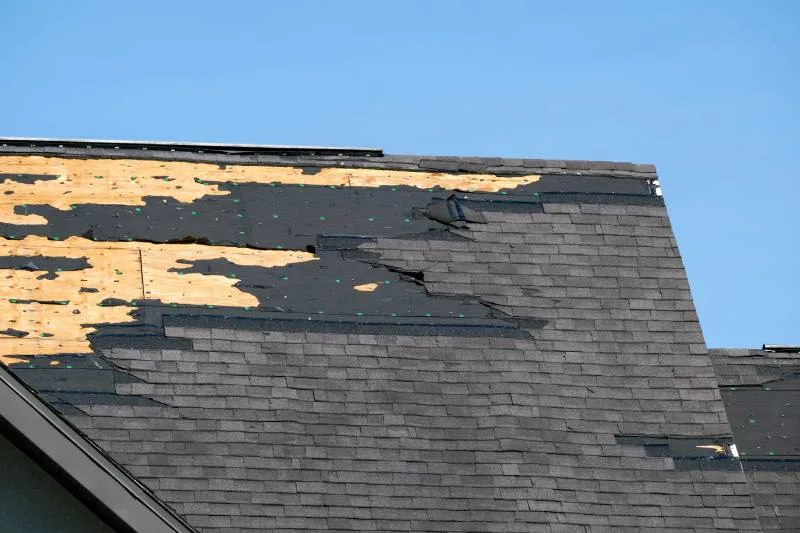
Damaged house roof with missing shingles after hurricane Ian in Florida

According to the Palm Beach Post, with Florida only one and a half months away from the next hurricane season, less than 57 percent of Hurricane Irma insurance claims have been closed with insurance payments, leaving many home and business owners at a loss, wondering if they will ever hear back on their insurance claims, and whether perhaps those claims will be denied due to the $8.6 billion backlog on them.

In addition, industry officials recently acknowledged that they may have underpaid on tens of thousands of claims they declared closed after September. For example, Florida state-run Citizens Property Insurance just reopened more than 24,000 Hurricane Irma claims to review as more information has become available.

Reactions to Threats of Litigation

With so many Florida property owners feeling abandoned and on their own, insurance companies are now concerned about litigation. In particular, it is of concern that many claims are declared closed in the first place, only to be reopened once legal concerns are expressed.

Shady Tactics

This is arguably a profitable tactic used by the insurance companies, as many property owners simply give up once they hear that their claim is closed. As a result, many claims are grossly underpaid or not paid at all. In one case, for example, a public adjuster found more than $21,000 in damages, where Florida’s largest insurer—Universal Property & Casualty Insurance Co.—had paid the property owner $500 and declared her claim closed.

What many people get when they try to ask questions about decisions like these are terse letters and unreturned calls. According to the Office of Insurance Regulation, in Palm Beach County alone, while more than half of the 40,000 claims against insurers have been closed with payment, more than 15,000 have been closed without any payment, and 5,000 are still open.

Common Excuses Used To Deny Hurricane Insurance Claims

Reasons cited for denying claims include insurers indicating that something is not covered under a given policy (and instead requires a separate flood policy), that a claim does not meet hurricane deductibles, and that companies do not agree that the damage described in a claim was specifically covered by Hurricane Irma.

For many property owners, the delays, underpaid claims, and denials cost them thousands of additional dollars in expenses as damage goes unfixed and unaddressed.

Florida Hurricane Recovery Attorneys

If your Florida property suffers from hurricane damage, the last thing that you want is your insurance claim to be grossly underpaid or not paid at all. Work with our Tampa Bay and Fort Myers hurricane insurance attorneys today to ensure that you have what you need to move forward with your life, with security. Contact us at HD Law Partners today to schedule a consultation.

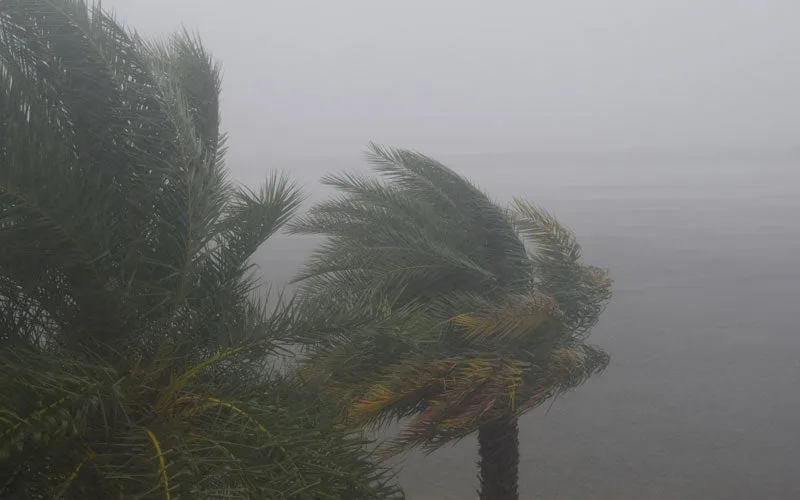
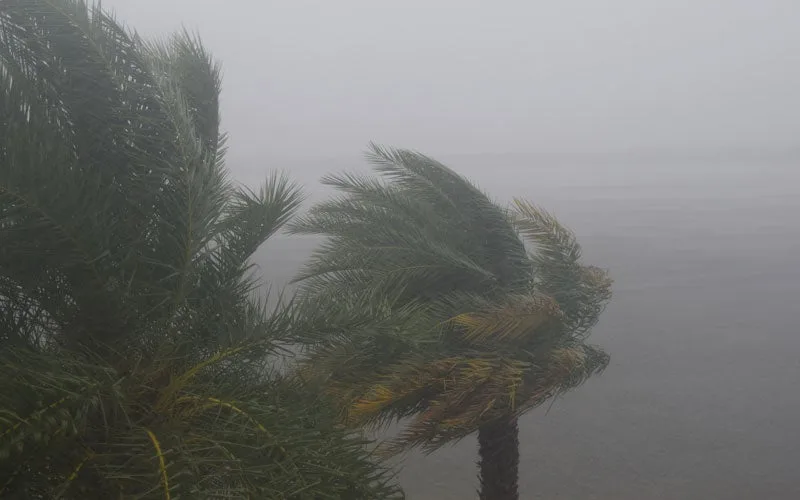
palm trees hurricane

When it comes to figuring out whether a homeowners’ association is liable for damage, it largely depends upon a) what caused the damage and b) the declaration of condominium.

Take, for example, windows in Florida homeowners’ associations that started leaking after Hurricane Irma: As a general rule, any damage done by a hurricane falls on the responsibility of the association and its insurance policy.

The Law in Florida

The Florida Legislature requires lower or stable insurance premiums for associations in order to protect the safety, health, and welfare of Florida citizens. This includes adequate property insurance for full insurable value, replacement cost, or similar coverage, and this includes coverage sufficient to the probable maximum loss for communities for a 250-year windstorm event.

Determining Cause Is Key

However, figuring out if the leaks are actually due to the hurricane—or something else—can sometimes be challenging, and typically requires that the member consult with a professional to determine the cause of the damage. If, in fact, the damage was due to the hurricane, then the association is likely responsible for making repairs and the member would need to cover anything associated with the repair, such as the paint, window coverings, etc.

If, instead, the damage is caused by normal wear and tear or another cause, parties should look to the condominium agreement to determine if it addresses the circumstance. Many of these documents indicate that unit owners are responsible for normal wear and tear; thus, the owner/member would need to cover the cost of repairing or replacing the window.

Mechanisms to Alter Responsibility

Still, it is also entirely possible for an association agreement to explicitly address damage done by hurricane events and to place the responsibility on the owner instead of the association and its insurance. For example, while the law may encourage associations to have hurricane insurance to cover property damage, that doesn’t mean that the responsibility for repairs and replacement of windows can’t still be placed on individual owners. Thus, when these types of questions come up, it makes sense to consult with an experienced Florida homeowners’ association attorney in order to determine the best course of action.

In addition, homeowners’ agreements also often contain Alternative Dispute Resolution (ADR) provisions, which mandate that if disputes arise over issues like these, the relevant parties go through ADR instead of filing in court. Making sure that, as an association, you abide by the association agreement is important, as you do not want to risk leaky windows leading to mold or mildew issues, which could lead to health claims.

Florida Homeowners’ Association Attorneys

At HD Law Partners, our Florida homeowners’ association attorneys provide the proactive legal representation you can count on as an association. With over 40 years’ combined experience, we have the expertise to ensure that you are fully protected. Contact us today to find out more.

Resource:

.leg.state.fl.us/Statutes/index.cfm?App_mode=Display_Statute&URL=0700-0799/0718/Sections/0718.111.html

HTTP Error 500.30 - ASP.NET Core app failed to start

HTTP Error 500.30 - ASP.NET Core app failed to start

Common solutions to this issue:

Troubleshooting steps:

For more guidance on diagnosing and handling these errors, visit Troubleshoot ASP.NET Core on Azure App Service and IIS.